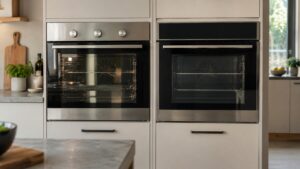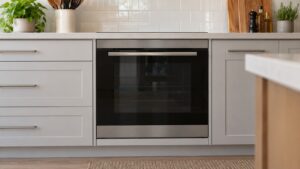
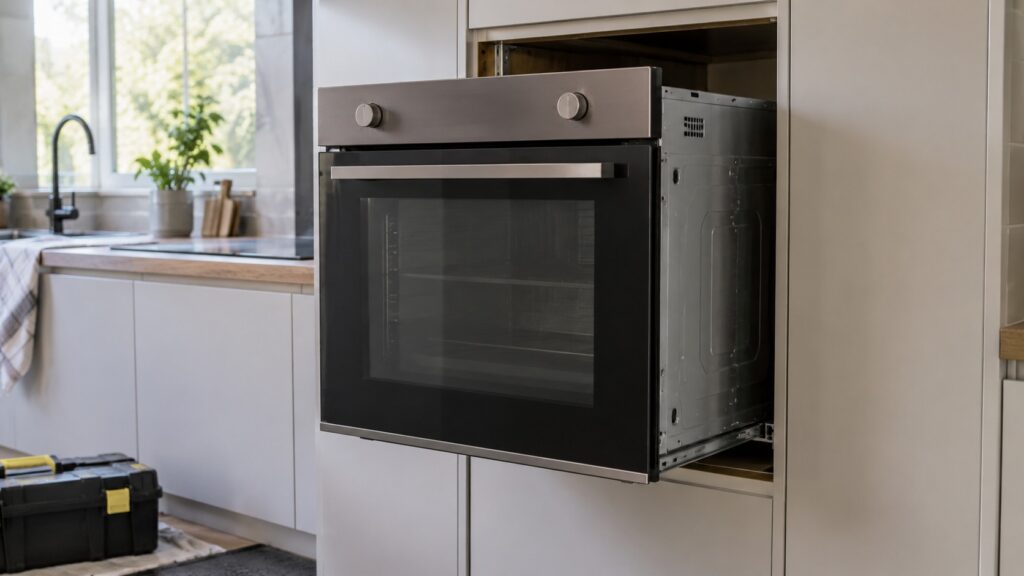
A Bertazzoni built in oven cabinet cutout has to match the dimensions in the oven’s own installation instructions, and the cabinet around it has to leave the ventilation the oven needs. We do not publish cutout sizes for any model on our site, so we will not give a number here; the manual and the rating label for your exact model are the only reliable source. What this page covers is the order of the job, what to measure and confirm and which ventilation and support mistakes cause an oven that overheats its cabinet, rattles, runs its fan constantly or does not sit square.
Where do you get the right cutout dimensions?
From the installation instructions that came with the oven, or from the manual for your exact model. Find the model number on the rating label first; our oven model number and rating plate guide shows how to read what is printed there. Our site lists many oven models, such as the PROF30FSEXV, but the model pages give series and type rather than cutout sizes, and we do not decode the letters in a model name. A single oven series can include single and double ovens and speed or specialty ovens, so do not take the dimensions of one model and apply them to another.
If you are planning a new kitchen, get the instructions for the oven before the cabinets are built. If you are replacing an oven, measure the existing opening, then compare it with the cutout in the new oven’s instructions, in all three directions. The instructions will give a range or a fixed size; read the notes that go with it.
How do you measure the opening?
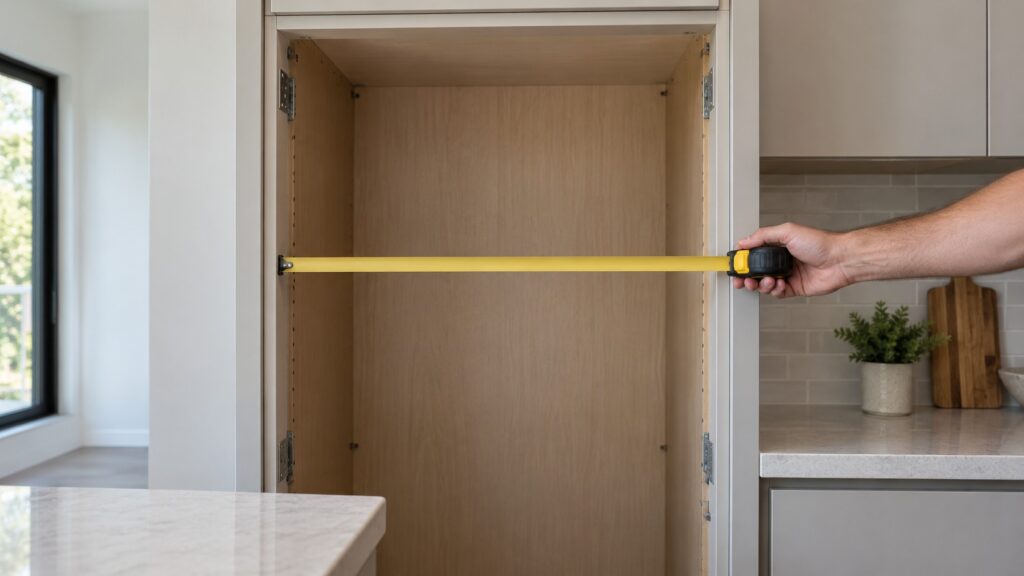
Measure the width at the top, middle and bottom, the height at the left, middle and right, and the depth at several points. Cabinets are rarely perfectly square, and the smallest of each set of measurements is the one that counts. Check that the floor of the opening is level in both directions with a level, and that the shelf or support that will carry the oven is solid. Note anything in the opening that projects, such as a screw, a cleat or a trim edge.
Take a photo of the opening with the tape measure in it, so that you can show it to a technician or an installer. Bring the tape and level back after you set the oven in place to check it again. Our oven installation checks that prevent faults guide covers checks that prevent common faults.
Why does ventilation matter for a built-in oven?
An oven puts out a great deal of heat, and a built-in oven sits in a box of cabinetry that can trap it. The installation instructions specify openings or gaps so that cooling air can reach the oven and leave again, and a cooling fan in the oven uses that airflow. If the gaps are filled, covered by a panel or crowded with items, the oven and the cabinet run hotter, the fan works harder and parts wear faster. You may notice the cooling fan running long after cooking, which is a symptom we describe on our page about the oven cooling fan running too long.
Do not seal, caulk or tape over a gap that the instructions say should stay open. Do not store paper, plastic or other items in a space intended for air movement, and keep the cabinet above and beside the oven free of anything that could be damaged by heat. Your cabinet maker needs these points in writing before the openings are cut.
How should the oven be supported and fixed?
The oven is heavy, so the shelf or frame must be strong, flat and fixed, and the cabinet itself must be sound. Follow the instructions for fixing the oven so it cannot tip or slide when the door is opened and loaded. Two people should lift the oven and place it; do not lift it by the door or the handle. Slide it into the opening gently, with the supply lead and any connections free, so that you do not trap or crush them. Check the oven sits level, then check the door opens and closes without catching the cabinet.
If the oven is part of a range rather than a wall oven, a different set of rules applies, including anti-tip hardware and clearances; see our range anti-tip and clearances guide, and our guide to the range vs rangetop and wall oven if you are still choosing the format.
What belongs to a qualified person?
Connecting power, checking the circuit and any gas supply are jobs for a qualified electrician or gas installer. A built-in electric oven is wired to a circuit of the right rating; do not extend, splice or change the lead. If the model uses gas, a gas fitter must connect and test it. Never try to check a gas connection yourself. If you smell gas, do not switch anything on or off; leave the house and call your gas utility or 911 from outside. If a connection is damaged or water has reached the electrical supply, switch the breaker off from a dry floor.
When should you call a technician?
Call if the oven overheats its cabinet, the door sticks against the opening, the fan runs on and on after a bake or the oven shows a fault after installation. Our Bertazzoni oven repair page explains how a visit works.