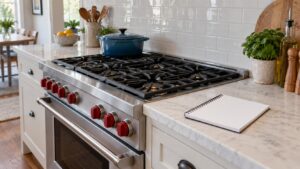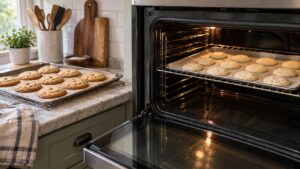
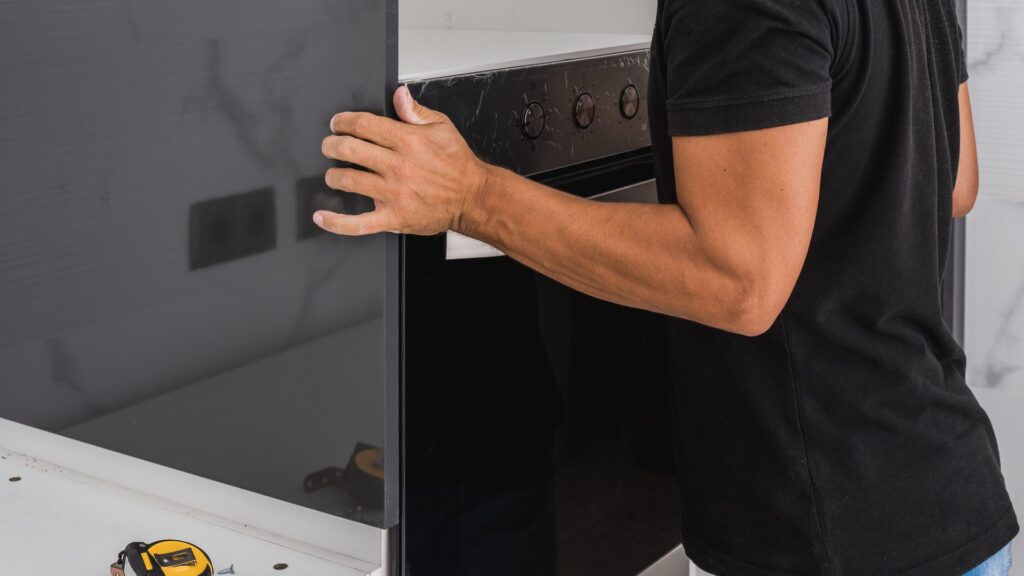
Bertazzoni range installation goes wrong in quiet ways. The appliance works on the day, and the consequences — a door that will not close flush, scorched cabinet edges, a burner that never runs right, a range that rocks when a heavy pan lands on it — appear weeks or months later. Most of them trace back to four things settled before the range is pushed into place: the anti-tip fixing, the clearances, the leveling, and the supply.
The anti-tip bracket, which is not optional
A freestanding range with the oven door open and a loaded roasting pan on it can tip forward. The anti-tip bracket exists for exactly that, and it is required by the manufacturer’s instructions and by code.
The common failure is not that it is omitted — it is that it is fitted and not engaged. The range gets pushed back, the rear foot or bracket misses the catch by an inch, and nobody checks. The test takes five seconds: with the range in place, try to tilt the front upward. If it lifts freely, the bracket is not doing anything.
Two situations need attention. On a tile or stone floor, the bracket may need anchors rather than screws into subfloor. And any time the range is pulled out for service or cleaning, it has to re-engage when it goes back — a bracket only protects you while it is engaged.
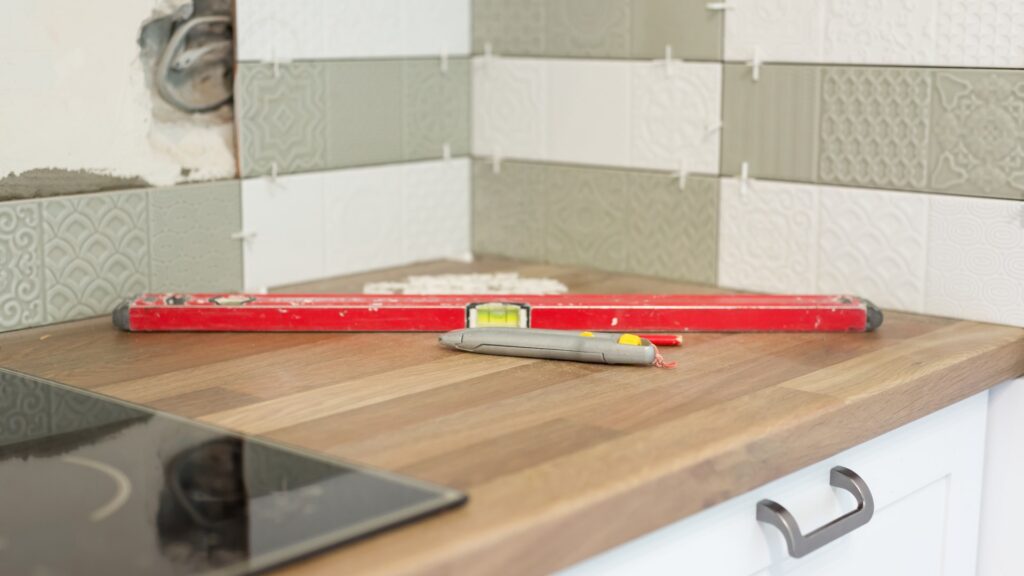
Clearances, and what damage looks like when they are wrong
The instructions state minimum distances to combustible surfaces at the sides, at the rear and above. They are not conservative padding; they are the distances at which the tested appliance does not damage what is around it.
- Sides. Too close to a cabinet and the panel edge discolors and eventually blisters, usually on the side nearest the highest-output burner.
- Above. The clearance to a hood or to any cabinet above the range is specified, and a hood mounted too low both performs worse and takes more heat than it was designed for.
- Rear. On slide-in models a rear gap may be part of the design, and blocking it with a backsplash detail changes how the appliance vents.
- Flooring. The range has to sit on a surface that supports it and does not creep; vinyl can indent under feet carrying hundreds of pounds.
The site’s page on installation checks that prevent faults lists what to verify on an existing installation without moving anything.
Leveling, which affects cooking as well as fitting
A range that is not level bakes unevenly and fries unevenly, because oil and batter find the low corner. It is also the cause of doors that appear misaligned: a cabinet twisting an appliance frame shows up at the door, which is the least rigid part.
Level it in place, with the feet, checking on the cooking surface rather than on the edge of the frame. Check front to back and side to side, then check again after the range is in its final position — pushing a range back over an uneven floor undoes what you set. Where the countertop on either side is not level itself, split the difference so the range sits square to the eye, then confirm with a spirit level on the grates.
Gas and electric supply
Gas type. Appliances ship configured for one gas. Running a natural gas appliance on propane without conversion produces oversized flames, sooting and a genuine hazard; the reverse gives weak, lifting flames. Conversion means changing injectors and adjusting the low-flame setting, and it is licensed work in every jurisdiction we serve.
The connector. A flexible gas connector of the correct rating, not reused from the previous appliance, with a shutoff valve reachable without moving the range. A leak test after connection is part of the job, not an extra.
Electricity. An all-gas range still needs a receptacle for ignition, controls and lighting. A dual fuel range needs a circuit sized for the oven, and that is frequently the surprise in a kitchen that previously had an all-gas appliance — the existing receptacle is not adequate and an electrician is needed before delivery, not after.
Receptacle position. It has to be reachable but not behind the range’s own back panel or a heat-bearing area. The instructions specify a zone; installing outside it means the cord is either strained or in contact with something hot.
Slide-in versus freestanding, decided before delivery
These two fit differently and the difference is not cosmetic. A freestanding range has finished side panels and a back guard, and it can stand alone at the end of a run. A slide-in is designed to be surrounded: its sides are unfinished, its edges overlap the countertop, and it relies on the counter meeting it cleanly on both sides.
Putting a slide-in where a freestanding range used to be leaves a visible gap at the back unless the countertop was cut for it, and the reverse leaves an overhang that fouls the drawer fronts. Neither is a fault anyone can repair afterward, which is why it belongs on the checklist before the order rather than on the day of delivery.
Before the delivery truck arrives
When to call
Call when a newly installed range bakes unevenly or rocks, when burners are yellow or weak after installation, when the oven door does not sit square, when cabinet edges near the range show heat damage, or when you want an existing installation checked before a new appliance is ordered. Our page on range troubleshooting covers what to observe first.
We are an independent repair company and not a factory service arm. Pricing starts from a diagnostic visit and we confirm the estimate before any work begins. Bertazzoni range repair covers burners, igniters, valves, elements and controls, and you can schedule a visit online.