Bertazzoni oven cooking modes differ in two ways: where the heat comes from and whether a fan moves it around. Conventional bake heats from below, with a gas burner on a gas range or an electric element on a dual fuel range, and the air stays fairly still. Convection bake adds the fan, so heat is more even and food browns faster. Broil heats from the top and is meant for browning and finishing close to the heat. Most complaints that an oven is not browning come from using a mode that does not suit the dish, and not from a fault, so understanding the modes saves many service calls.
What is the difference between gas and dual fuel ovens?
The fuel changes how the oven cooks even in the same mode. A gas oven burns gas below the cavity floor, and a by-product of burning gas is water vapor, so the air in the oven is slightly more humid. That keeps baked goods moist and gives softer browning, which many bakers like for breads and roasts and find frustrating for crisp finishes. A dual fuel range uses electric elements in the oven, which give drier, steadier heat and stronger browning, while keeping gas burners on the cooktop for control.
The two types also differ in how they fail. A gas oven depends on an igniter and a safety valve, and an electric oven depends on elements and relays. Our Bertazzoni model number decoder tells you which kind you own, and our dual fuel range faults, top versus oven guide explains how to separate the two sets of faults.
How does conventional bake work?
In conventional bake, the heat source cycles on and off to hold the set temperature, and the air in the cavity moves only by natural convection. The air near the heat source is hotter than the air near the top, and the temperature varies from rack to rack. That makes conventional bake the gentlest mode, which is why it suits cakes, custards and anything with a delicate structure that fan-driven air might dry or distort.
It also makes the rack position matter. Food on the lowest rack gets more direct heat from below and browns on the bottom first, while food on the upper rack sees more of the heat that has risen. Use the center rack as the default, and move toward the heat only when you want a darker top or bottom.
What does convection add?
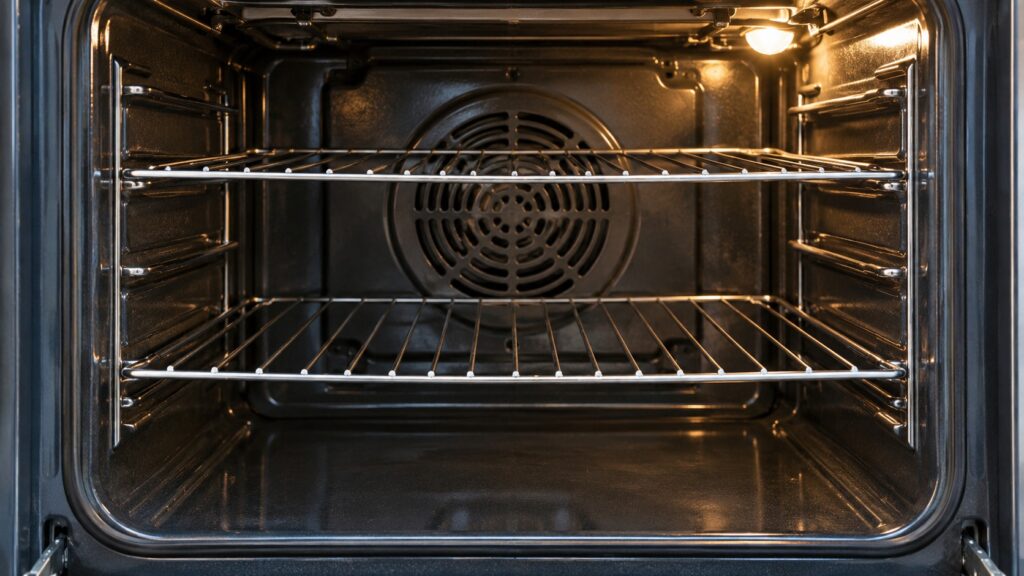
A fan at the back of the cavity moves the air so that the temperature is more even from rack to rack, and the surface of the food loses its insulating layer of still air. Food cooks faster, browns more evenly and dries out its surface, which is why convection gives crisper edges and better color. The fan is the part that makes noise when it runs, and our guide to convection fan versus cooling fan noise explains which sounds are normal.
The usual adjustment for baked goods is to lower the temperature by about 25 degrees F or shorten the time. Use shallow pans so the air can reach the food, and avoid covering whole racks with foil. For tall cakes and custards, switch the fan off, since moving air can set the surface too early.
How does broil work, and why does it matter for browning?
Broil heats from the top, with a gas burner or an electric element above the food, and it works by intense radiant heat rather than hot air. It is the mode for a quick finish: browning a gratin, melting cheese, charring peppers. It is not a mode for cooking food through, because it heats only the surface, so thick cuts can burn outside while staying raw inside.
Keep the rack position in mind, since the distance from the broiler decides how fast the surface browns. Most ovens expect the door to be closed or slightly open while broiling, which your manual specifies for your model. Never leave a broiling oven unattended, and keep the pan and the food away from the walls of the cavity.
Why did my oven not brown the food?
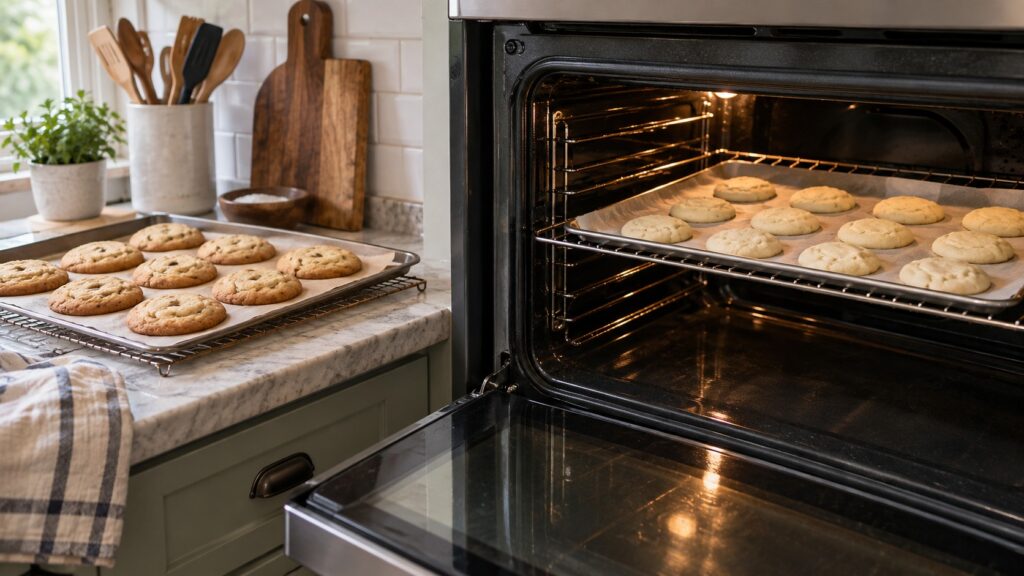
Match the problem to the mode. A pan of biscotti or cookies baked in conventional mode on a lower rack will pale on top, because gas heat is moist and the top has little direct heat. Switch to convection, move the pan to a higher rack, use a shallow sheet and give it more time at a slightly lower temperature, and the same recipe will brown evenly.
If nothing browns, even in broil and even after you have adjusted the mode, the problem may be mechanical. A weak gas flame, a worn element, a drifting temperature sensor or a convection fan that is not turning all change how an oven cooks. Our Bertazzoni gas oven shuts off mid-bake guide covers a flame that fades, and the symptom page for uneven baking lists the other causes.
How do you choose a mode when you are not sure?
Start with the dish. If the surface must stay soft or the structure is delicate, choose conventional bake. If you want color, crispness or speed, choose convection bake and lower the temperature a little. If you only need to finish the top, choose broil and stay close. When in doubt, bake one batch in each mode and write down which you preferred. Our Bertazzoni oven how the main systems work guide covers the burners, elements and sensors behind each mode.
If the oven fails to heat as it should in any mode, our Bertazzoni range repair page explains a visit.