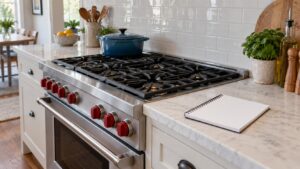
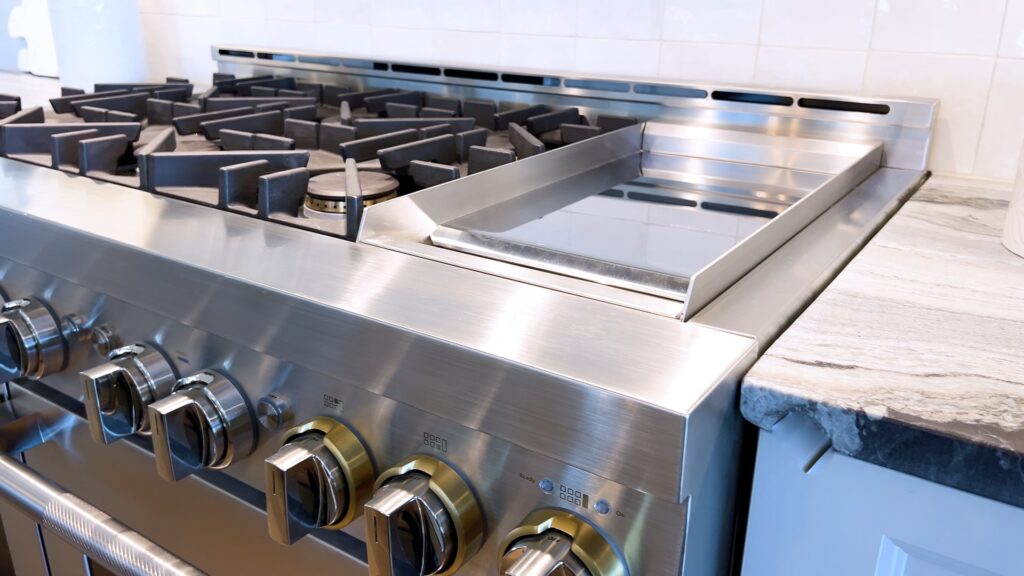
A Bertazzoni dual fuel range is two appliances sharing a cabinet: gas burners on top, an electric oven below. That matters the moment something goes wrong, because the two halves fail for completely different reasons and are diagnosed in completely different ways. The first question on every dual fuel call is not what is broken — it is which half is broken, and whether the symptom you are seeing belongs to the half you think it does.
Why the gas side needs electricity
This surprises people during a power cut and it is the single most useful thing to understand about a dual fuel range. The burners are lit by an electric spark. The spark module, the switches in the control knobs and — on sealed burner designs — the flame supervision device all run on the range’s electrical supply.
So a range with no power has a cooktop that will not ignite. The gas valves themselves still open when the knob is turned, which is why you can light a burner with a match during an outage on most models, but nothing electrical will work and the oven will not run at all.
The diagnostic consequence is direct: when neither half works, stop looking at the appliance. Check the breaker, check that the receptacle is live, and check the terminal block if the range is hard wired. Our guide to installation checks covers the supply requirements.
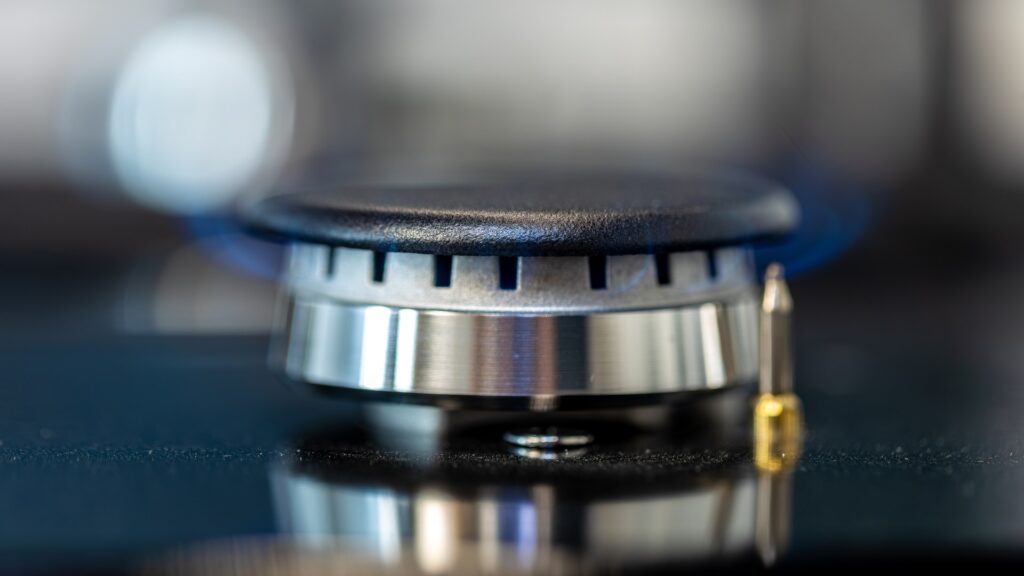
Top-side faults, in the order they occur
One burner will not light, others do. Almost always that burner’s own hardware: a cap seated crookedly, ports blocked by a boil-over, a wet igniter after a spill or a clean. Lift the cap, check it sits flat and the slots are clear, dry everything, refit and try again. This resolves a large share of calls.
Clicking that will not stop. The spark module keeps firing because moisture is bridging an igniter, or because a knob switch has not returned. It often starts after cleaning and clears once everything is properly dry. If it persists overnight, the module or a switch is at fault — and continuous sparking is worth attending to rather than living with.
A burner lights, then goes out when the knob is released. On sealed burners with flame supervision, the thermocouple has to be heated by the flame before it will hold the valve open. A sooted or misaligned thermocouple, or simply releasing the knob too early, produces this. If holding the knob for a full twenty seconds works, the device is marginal rather than dead.
Yellow, weak or uneven flames. Port blockage, a cap out of position, or a gas supply issue. Our page on a range troubleshooting checklist covers the order of checks; if every burner is weak at once, the supply side is where to look, not the burners.
Oven-side faults, which look nothing like the above
Not heating at all. An element, its connection, or the control. An oven that heats on one mode and not another narrows this immediately: bake works but broil does not means the broil element or its relay, not the sensor.
Temperature wrong but stable. A calibration or sensor question. Measure with an oven thermometer after a full preheat plus fifteen minutes before concluding anything, because ovens announce preheat before the cavity mass has caught up.
Temperature wildly variable, or shutting down when hot. This points at a sensor degrading as it warms, or at a cooling fan and ventilation problem. A control that is overheating protects itself, and the resulting shutdown is easily mistaken for a dead board.
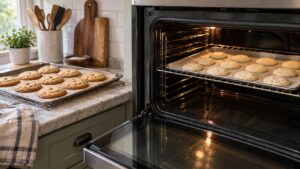
Uneven baking. Usually loading, racks and pan choice rather than the appliance. The site’s page on how the oven systems work explains what convection changes and what it does not.
The symptom that crosses the line
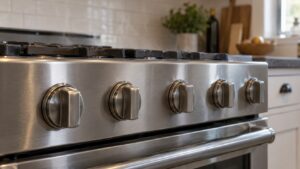
One pattern genuinely involves both halves: an oven that runs hot enough to affect the knobs and controls above it. Heat rising through the fascia can make control knobs stiff and, over years, degrade the switches behind them. If the oven has been running hot, or the door seal has been leaking heat at the top edge, a stiff or sticky knob on the cooktop side may be a consequence rather than a separate fault.
The reverse also happens: a heavy boil-over on the cooktop can run down behind the fascia and reach the oven controls. Neither is common, but both explain faults that otherwise seem to have two unrelated causes at once.
Two checks that are worth doing first, every time
Power the range down for a full minute. Not a quick flick — off at the breaker, wait, back on. Control boards on ranges hold state, and a board that has locked after a brownout or a surge produces symptoms that look mechanical: a dead display, an oven that will not accept a setting, a cooktop that ignores its knobs. A meaningful share of calls end here, and it costs nothing to try before booking a visit.
Clean and dry everything on the cooktop. Caps off, ports checked against the light, igniters dried, caps refitted flat. Do this even when the fault seems unrelated to a spill, because moisture under a cap migrates and the burner that misbehaves is often not the one that was cleaned.
What to have ready before the visit
When to call
Call when a burner will not light with clean, dry, correctly seated hardware; when sparking continues after everything is dry; when the oven does not heat or holds the wrong temperature; when either half shuts down while hot; or when you smell gas at any time — in that case shut off the supply and call from outside the house.
We are an independent repair company and not a factory service arm. Pricing starts from a diagnostic visit and we confirm the estimate before any work begins. Bertazzoni range repair covers igniters, valves, elements, sensors and controls, and you can schedule a visit online.