
A Bertazzoni model number is not a serial code. It is a sentence: the series comes first, then the size in inches, then the configuration, then the finish. Read left to right and a string like PRO366BCFEPCAT stops being noise and starts telling you that it is a Professional Series appliance, 36 inches wide, with six burners, and that the tail of the string is its finish. This Bertazzoni model number decoder covers the parts of the string that matter when you are ordering a part or booking a repair, and it is built from the model pages on this site rather than from guesswork.
What do the first three letters of a Bertazzoni model number mean?
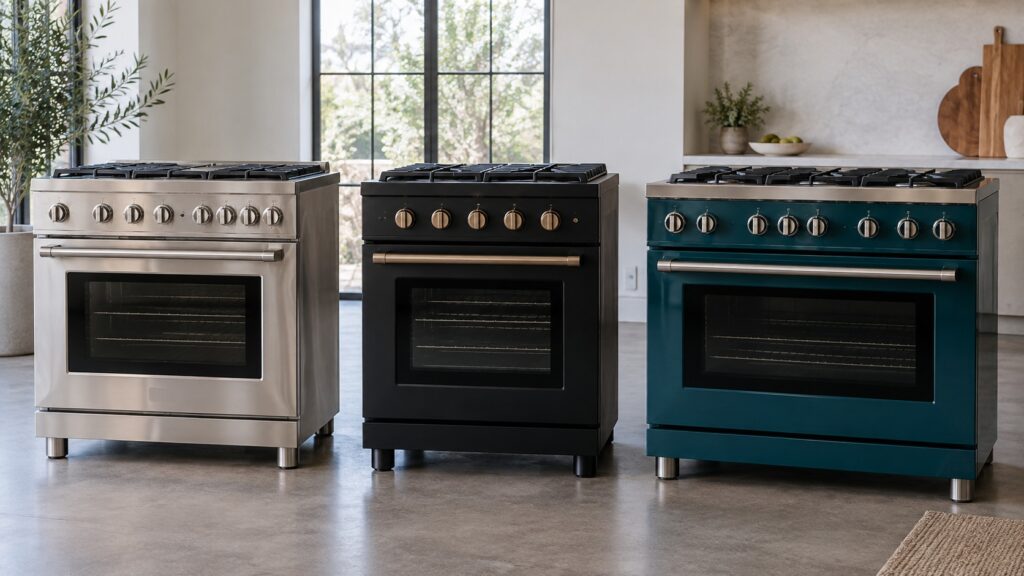
They name the series, and the series is the first thing that decides whether a part will fit. Professional, Master and Heritage are three different product lines with different control layouts, different knob and handle designs and different door assemblies, even where the size and fuel match exactly. A door or a control knob taken from a MAS365 will not fit a PRO365, and the two appliances can sit side by side in a showroom looking closely related.
The letters also travel: PROF and PRO both belong to Professional, MAST and MAS both belong to Master, and FMAS appears on Master wall ovens. Treat the first three characters as the family and do not read anything into the fourth until you have the full string in front of you.
What do the numbers mean?
The number group is the most reliable part of the whole string, and it usually carries two facts at once: the width in inches and, on a cooking appliance, the burner or zone count. Read the first two digits as the width.
- PRO244GASXV — 24 inches, four burners.
- MAS304INMXV — 30 inches, four induction zones.
- MAS365GASXV — 36 inches, five burners.
- PRO366BCFEPCAT — 36 inches, six burners.
- PRO486BTFGMXT — 48 inches, six burners.
- KIN36XV, KT30XT, KU48PRO2X — hoods at 36, 30 and 48 inches.
On refrigeration the same rule holds without the burner digit: REF18FCBIPRV is an 18-inch column, REF30BMBZPNV is 30 inches, REF36FDBZPNV is 36 inches. That single number is the one you should check before believing any parts listing, because a 30 and a 36 of the same series share a catalog photo and nothing else.
How do you tell fuel and configuration apart?
The letters between the size and the finish describe what the appliance is, and this is where the site itself is the best authority, because every model page here is filed under the appliance type it belongs to. That filing is the evidence for reading the refrigeration letters:
- WC — wine. REF18WCBPRV and REF24WCBPNV are both filed as wine refrigeration.
- FC — freezer column. REF18FCBIPRV and REF30FCIPRR are filed as freezers.
- RC — refrigerator column. REF30RCPRR and REF36RCPRR are filed as refrigerators.
- FD — french door, as in REF36FDBZPNV. BM — bottom mount, as in REF30BMBZPNV.
On cooking appliances the same principle applies: GAS marks an all-gas appliance, DF marks dual fuel, and IN or IF marks induction, which is why MAS365DFMXV and MAS365GASXV are the same size in the same series and need different service entirely. The remaining letters cover the oven type and the control set, and they vary enough between years that the honest advice is to read them off the rating plate rather than to reconstruct them from memory.
What are the last two or three letters for?
Finish and trim. XV, XT, CAT, BG, XG and their relatives separate stainless from black, from carbon, from the colored enamels Bertazzoni is known for, and they are the part of the string people leave off when they call. That is a problem, because the finish letters are exactly what a door skin, a kick plate, a knob set or a handle is ordered by. Two ranges that differ only in the last two characters take different visible parts and identical internal ones.
Hoods add one more wrinkle. The letters before the number separate the body types, and an insert, an under-cabinet hood, a wall canopy and an island canopy do not share housings even at the same width. KIN36XV and KT36XT are both 36-inch appliances, and almost nothing but the width is transferable between them.
Where is the number, and what should you write down?
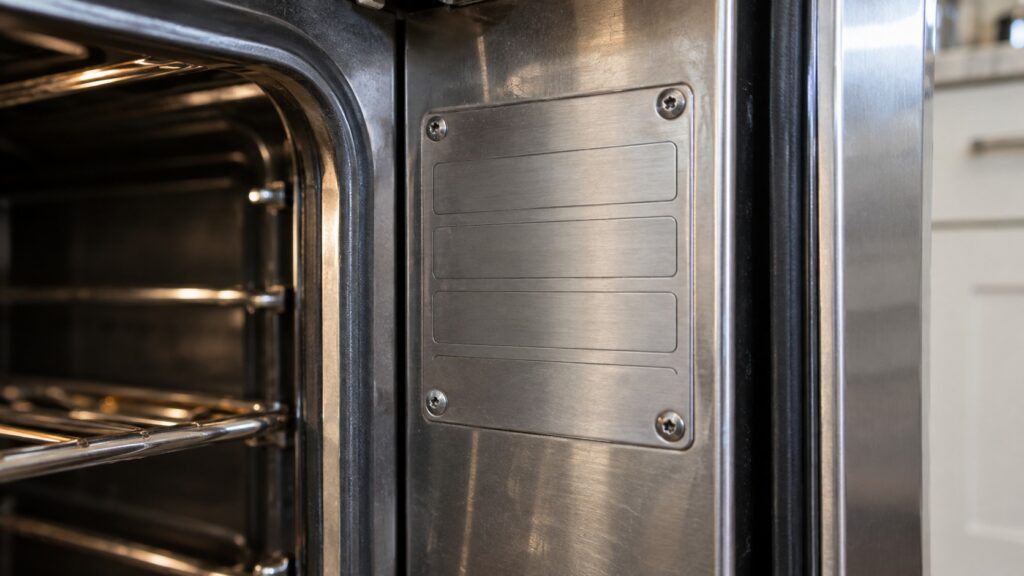
On a range, look on the frame behind the door at the bottom, or on the side of the oven cavity frame with the door open. On a hood it is inside the canopy with the filters removed. On refrigeration it is on the interior wall of the cabinet, and on a dishwasher on the tub edge behind the door. Write the entire string with nothing left off, and add the serial number underneath it while you are there, because the serial is what separates two production years of the same model.
One habit saves more calls than any of this. Keep the full string somewhere that is not the appliance: a photograph in your phone, a note in the drawer, a line in the household file. The plate on a range sits behind the door at floor level, the plate on a built-in refrigerator is behind a full load of food, and the plate on a hood is above head height behind the filters. Every one of those is awkward to reach at the moment you actually need it, which is on the phone with a parts counter.
Photograph the plate rather than copying it by hand. The characters most often misread are the digit zero against the letter O, and the digit one against the letter I, and both appear in these strings.
We are an independent repair company and not a factory service arm. Pricing starts from a diagnostic visit and we confirm the estimate before any work begins. With the full string to hand you can schedule a visit online and the right parts get loaded before anyone leaves.
For the plate locations appliance by appliance, see the range rating plate guide and the hood rating plate guide. The words behind the letters, such as dual fuel and rangetop, are defined in our range terms glossary, and hands-on work on a range is range repair.