Bertazzoni range terms come from two traditions at once — Italian cooking equipment and American kitchen fitting — and the vocabulary shows it. A rangetop is not a cooktop, dual fuel is not a fuel type, and the words on a spec sheet decide what will physically fit your kitchen. This glossary covers the terms that matter when you are buying, installing or describing a fault, and says what each one changes in practice.
What kind of appliance is it
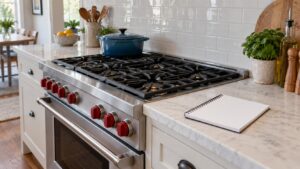
Range. One appliance containing both the cooking surface and the oven. Freestanding models have finished sides; slide-in models are designed to sit between cabinets with the countertop meeting them on each side. The distinction matters for fitting, not for cooking.
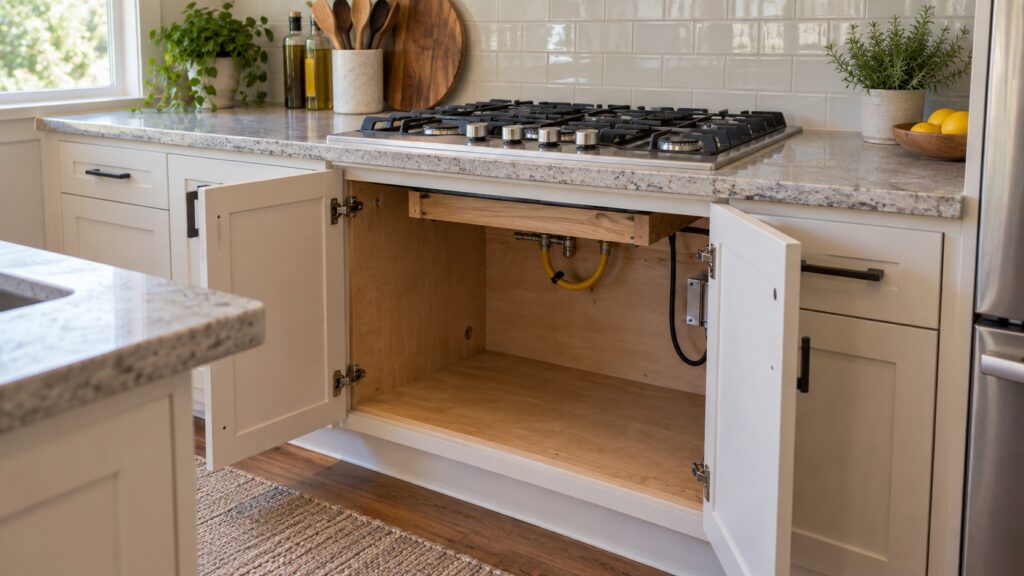
Rangetop. A professional-style cooking surface that drops into a counter with the cabinet space below left free — for a wall oven, for drawers, or for nothing. Rangetops are typically deeper and heavier than cooktops, with raised sides and full-width grates. If you are replacing one, measure the existing cutout before assuming a cooktop will fit the hole.
Cooktop. The shallower surface designed to sit above a cabinet or a fitted oven. Gas, induction or radiant. A cooktop’s cutout is specified by model and is not interchangeable with a rangetop’s.
Wall oven. An oven built into cabinetry at eye or waist height, paired with a separate cooking surface. Common with rangetops.
Fuel and heating terms
Dual fuel. Gas burners with an electric oven. The combination exists because the two halves are good at different things: gas gives immediate, visible control on the surface, while an electric oven holds a steadier temperature and is easier to make even. Our guide on dual fuel faults covers what that split means when something goes wrong.
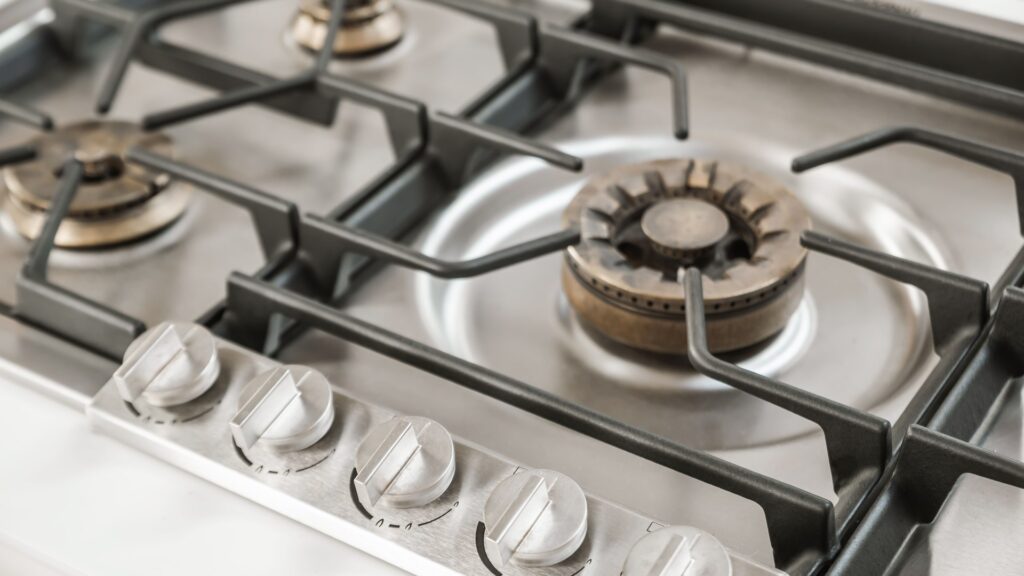
Sealed burner. A burner whose base is sealed to the cooking surface, so spills stay on top and cannot run into the cabinet. Nearly universal now, and the reason a modern gas top is wiped rather than dismantled.
Flame supervision. A safety device — usually a thermocouple beside the burner — that holds the gas valve open only while it is hot. It is why a burner needs the knob held in for a few seconds after lighting, and why a burner that goes out on release is often a thermocouple question rather than a gas one.
BTU. British thermal units per hour: the rate a burner can deliver heat. Higher is faster, not better. A range with one very high-output burner and several moderate ones is more useful than one where everything is high, because low, stable simmering is harder to achieve than high heat.
Induction. An electric surface that heats the pan directly through a magnetic field. Fast and controllable, but requires ferrous cookware and a dedicated circuit.
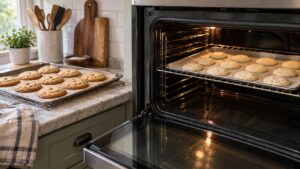
Convection. A fan circulating air in the oven cavity. It bakes faster and more evenly, and recipes written for a still oven usually need a temperature reduction. Covered further in the site’s guide on how the oven systems work.
Surface and accessory terms
Burner cap and burner head. The two-part assembly on a gas burner. The head carries the ports; the cap sits on top and shapes the flame. A cap that is not seated flat produces almost every complaint people report about flame quality.
Griddle. A flat plate, either an accessory over the grates or an integral heated section, for cooking directly on metal. Integral griddles have their own heating and their own faults.
Wok ring. A support that holds a round-bottomed wok over a high-output burner. An accessory, not a burner type.
Continuous grates. Cast iron grates that join across the whole surface so pans slide between burners without being lifted. Heavier, and dishwasher treatment varies by finish — see the cleaning and maintenance guide.
Telescopic rails. Sliding rack supports in the oven, so a shelf can be pulled fully out without tipping. They are a wear item and can be replaced.
Words that appear when something is wrong
Igniter and spark module. The igniter is the ceramic-tipped electrode beside each burner; the spark module is the box that fires them. One module usually serves every burner, which is why a fault in it makes all of them click at once while a fault in one igniter affects only its own burner.
Temperature sensor. A probe in the oven cavity that reports temperature to the control. It is not a thermostat in the old mechanical sense — there is no dial being turned — and it drifts with age, which produces an oven that is steadily wrong rather than erratic.
Cooling fan run-on. A fan that keeps running after the oven is switched off, cooling the control area. Normal, and often reported as a fault. It should stop within a reasonable time; one that runs for hours is a sensor or a control matter.
Self-clean, pyrolytic. A cycle that heats the cavity high enough to reduce residue to ash, locking the door while it runs. It is hard on door seals, hinges and sometimes on the control, and a door that will not unlock afterward is a common aftermath rather than a coincidence.
Rating plate. The label carrying model and serial numbers, gas type and electrical rating. Everything in a parts conversation starts here, and its location differs by appliance — the rating plate guide has the places to look.
Installation vocabulary that decides whether it fits
The site’s installation checks page covers how these are verified before a fault appears, which is the cheapest moment to deal with any of them.
When to call
Call when a burner will not light or will not stay lit, when flames are yellow or uneven across several burners, when the oven holds the wrong temperature, when a griddle or induction zone stops heating, or when you need an existing installation assessed before replacing an appliance.
We are an independent repair company and not a factory service arm. Pricing starts from a diagnostic visit and we confirm the estimate before any work begins. Bertazzoni range repair covers burners, igniters, elements, sensors and controls, and you can schedule a visit online.