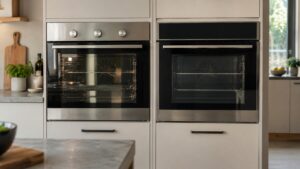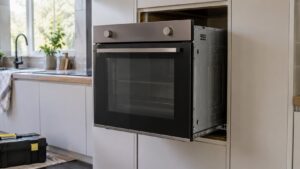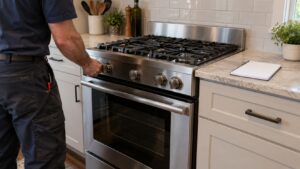
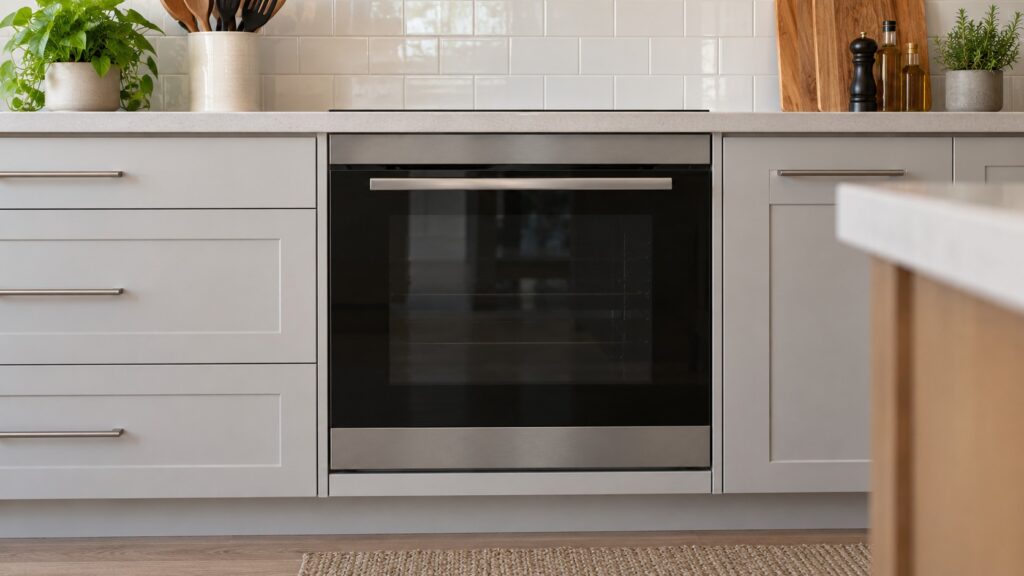
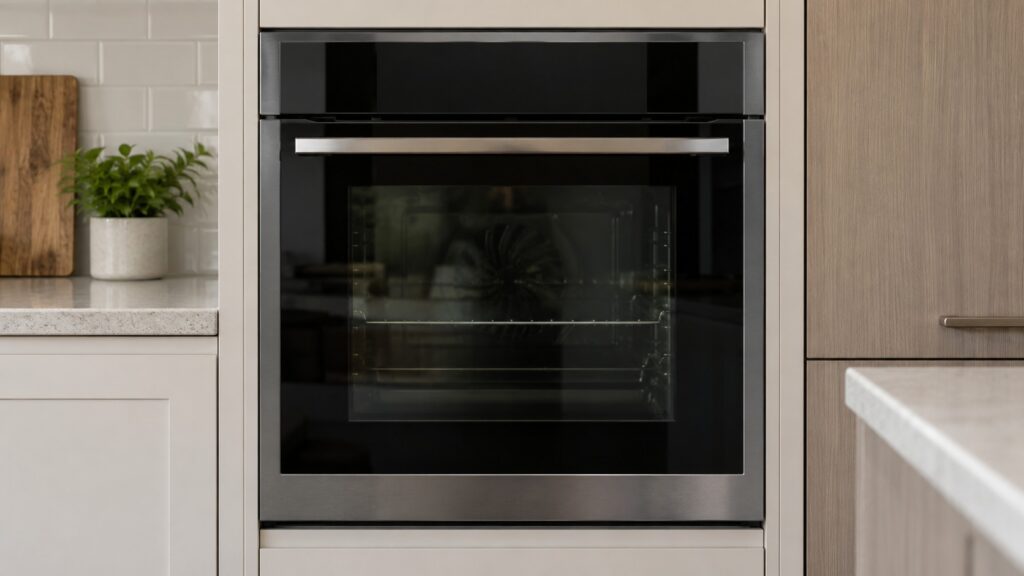
How a Bertazzoni oven door stays cool is the same trick most modern built-in ovens use: the door is built from several layers of glass with air between them, and air is drawn through the door to carry heat away, often helped by a cooling fan in the oven. The outer glass therefore stays far cooler than the oven cavity behind it, although it still gets warm. How many layers your door has and how its air path is arranged are set by the design of your model, and your owner’s manual is the place to check. What matters to you is knowing what is normal, what is not and why you should never take the door apart.
Why does an oven door not get as hot as the oven?
Heat moves by conduction, convection and radiation, and a cool-touch door is designed to interrupt all three. Panes of glass with gaps between them are poor conductors, so each layer passes less heat on to the next. Air in the gaps can move and carry heat away rather than letting it build up on the outer pane. A reflective coating on a surface inside the door, a feature of many ovens, bounces radiant heat back toward the cavity. Put together, the outer glass is much cooler than the oven interior, although the exact temperatures depend on the model and the cooking mode, and we do not quote a figure.
That also explains why a door gets warmer during a long, high-heat cooking session, a self-clean cycle or when the vents are blocked. If you notice the door feeling much hotter than before, note it down; our page on oven cooling fan runs too long covers a related symptom.
How does the air path through the door work?
Many ovens draw room air in near the bottom of the door or the front of the cabinet, pass it through channels in the door or around the cavity and let it out at the top near the control area or through a vent at the back. The air picks up heat on the way and carries it out. In some designs the cooling fan drives this airflow. In others the rising warm air creates a natural draft. We do not know which arrangement a particular Bertazzoni oven uses, so we will not say; the manual should.
The practical rule is not to block any opening. Do not hang towels over the handle or push things against vents above or below the door. Leave the clearances your installation instructions call for around the oven. Our oven installation checks that prevent faults guide covers why a tightly boxed oven runs hotter on the outside.
Why does the fan keep running after the oven is switched off?
A cooling fan often continues after the heat is off, because the cavity and the door are still hot and the fan carries that heat away from the controls and the cabinet. This is normal on many ovens and the fan switches itself off when things have cooled. If it runs for a very long time, or it is noisy, the symptom is worth noting. Our guide on convection fan vs cooling fan noise helps you tell the two fans apart, and the symptom page convection fan is noisy describes the other.
What problems does a hot or damaged door signal?
A door that is unusually hot to touch, a glass pane that looks misty between the layers, a chipped or cracked inner glass or a door that no longer closes squarely all deserve attention. The layers only work as a system: a failed seal or a cracked pane can change how heat flows, and a cracked pane can shatter under heat. Stop using the oven if the glass is cracked, chipped or loose, let it cool fully and call a technician. Moisture or haze trapped between layers means the door’s seal has failed, and it will not clear with cleaning.
Do not take the door off or open it up. An oven door is heavy, its hinges are spring loaded and the glass assembly is not made to be repaired by an owner. For everyday cleaning, follow the manual and use only what it recommends on the glass; harsh scrapers can scratch it, and scratches weaken it. Our oven cleaning and maintenance guide covers routine care.
What should children and pets know about the door?
A cool-touch door is not a cold door. During and after cooking the outer glass can be hot enough to burn skin, particularly with a long bake or a self-clean cycle. Keep children and pets back, and do not leave the oven running unattended near them. If the door has a lock for cleaning, do not try to force it; see our page on oven door locked.
When should you call a technician?
Call if the door is hot to a degree that worries you, if glass is cracked or hazy, if the door will not close squarely or seal, or if the fan behaves oddly. Our Bertazzoni oven repair page explains how a visit works, and the oven how the main systems work guide gives a wider picture.