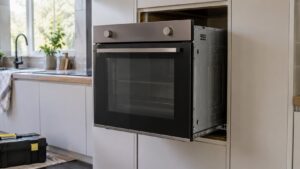
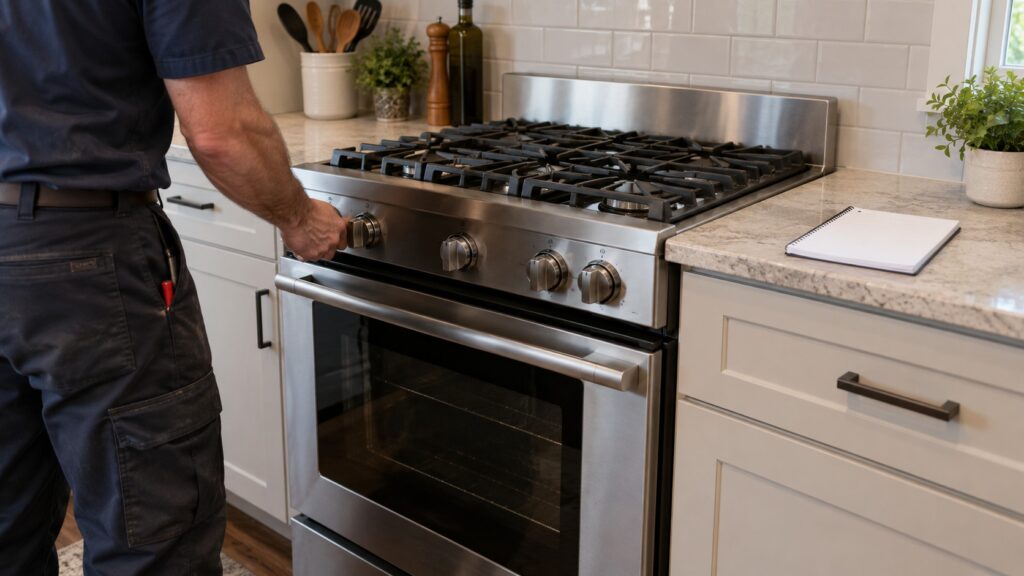
For a Bertazzoni gas oven igniter repair or replace question, repair is often the sensible route: an igniter is a wear part, and replacing it is a standard job for a technician. A whole oven or range is replaced only if the igniter is not the only problem, if the unit is old and has other faults, or if the parts and labor together do not make sense against a new appliance. Because an igniter sits next to the gas parts, this is work for a qualified technician and never an owner repair. What you can do is recognize the symptom, stay safe and give the technician good information.
What does a failing gas oven igniter look like?
The igniter lights the gas in the oven. When it is weak or dirty, the symptoms show up in the oven’s starting behavior: it may not light at all, may take a long time before it lights or may light and then go out. On our range pages a weak or dirty igniter is listed among the usual causes of an oven that will not heat, alongside the gas valve, the safety device, the temperature sensor and the control. Our guide on how a gas oven flame safety works explains how those parts relate.
Because several parts can cause the same symptom, a technician should confirm that the igniter is the fault before any part is ordered. A new igniter fitted to an oven whose real problem is the control or the valve will not cure it. Our symptom pages on oven not heating and range oven not heating show what to write down.
Is it safe to keep using the oven?
If the oven has trouble lighting, stop using it. Do not relight it again and again, and do not hold a match or lighter to it. Do not take the oven floor or any panel off to look at the igniter, and do not touch it. Do not adjust gas valves or orifices and do not test for gas leaks yourself. If you smell gas, do not switch anything on or off, including lights and the range, and do not light anything. Leave the house and call your gas utility or 911 from outside. For smoke, sparks or a burning smell, switch the range’s breaker off at the panel while standing on a dry floor.
When is repair the better choice?
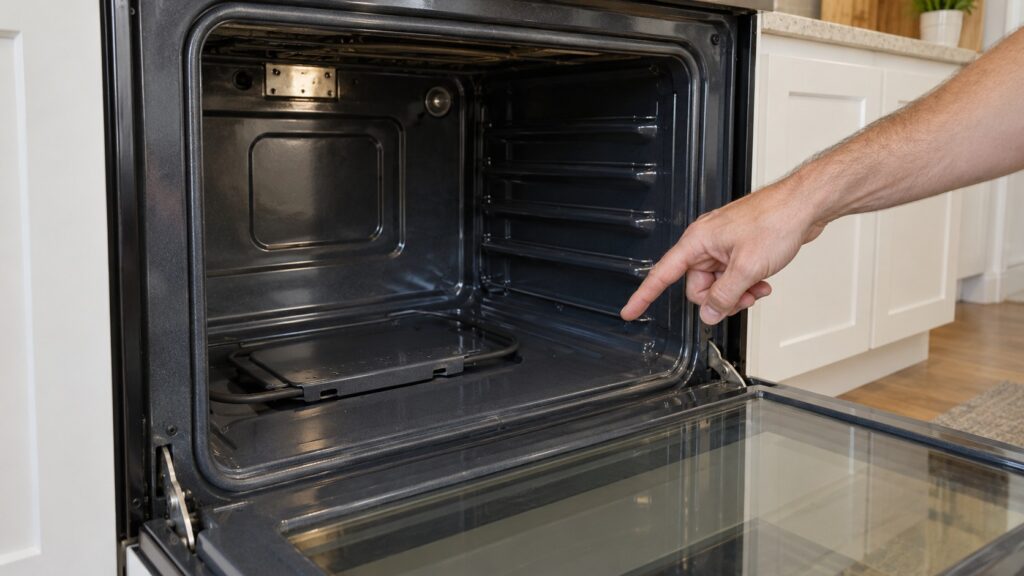
Repair is usually right when the igniter is the single confirmed fault, the oven otherwise works and its age and condition suggest it has years of use left. An igniter replacement is a standard repair. A new oven or range also involves delivery, connection and sometimes a new cutout or gas fitting, so weigh the whole job, not the part alone. Our oven repair or replace decision guide lists the factors a technician weighs, and the range repair or replace decision guide does the same for a range.
We cannot quote a price here, because it depends on the model, the part and your location. Ask for an upfront quote after the technician has inspected the oven and confirmed the fault, and ask whether the quote covers the part and the labor.
When does replacing the oven or range make sense?
Consider replacement if the technician finds more than the igniter: a failed control, a valve fault, damaged wiring or a safety device failure. Consider it too if the oven has a history of repeated faults, if parts are hard to get for your model or if you were planning to change it anyway. A range is more than the oven, so a repair that returns the oven to service may be more sensible than replacing the cooktop with it. A technician can tell you whether the rest of the range is sound. If you do replace, our gas oven vs electric oven guide covers what to confirm first.
Age alone is not a reason. A well-kept oven that needs one igniter is not worn out. A technician’s inspection should drive the decision, not guesswork about the part.
Why does an igniter wear out?
An igniter is used every time the oven lights, and each cycle puts it through heat and electrical load. Over time it can weaken, so it takes longer to reach the state it needs to light the gas, or it fails to do so. Spills and baked-on residue near the burner can also interfere with it. This is normal wear, not a sign that you did something wrong, and it is one reason a gas oven that has worked for years can suddenly start to hesitate. Keeping the oven clean as the manual describes helps, and our oven cleaning and maintenance guide explains what is safe for an owner to do. Do not scrub or probe around the burner or the igniter yourself.
What should you tell the technician?
Describe exactly what the oven does: does it click, glow or stay silent, how long does it wait before lighting, does it go out again and does it happen in every mode. Say whether the cooktop burners light normally, because that helps separate an oven fault from a supply fault. Photograph the display and the rating label with the model number. Tell the technician about any gas smell you noticed, even briefly. Our oven questions to ask before scheduling repair guide lists more, and our pages on range burner will not ignite and range continuous clicking cover related symptoms on the top.
Our Bertazzoni oven repair and range repair pages explain how a visit works.