Choosing between a Bertazzoni range and a rangetop with a separate wall oven is a kitchen decision before it is an appliance decision. Both cook the same way; what differs is where the oven lives, what the cabinetry has to provide, how much the installation costs, and what happens years later when one half needs service. This guide lays out the trade-offs we see in real kitchens, including the ones that only become obvious after the work is done.
What each configuration actually is
A range puts the cooking surface and the oven in one cabinet. It needs one opening between counters, one gas connection and one electrical supply. It is the arrangement most kitchens already have, which means replacing like with like is straightforward.
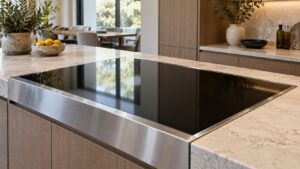
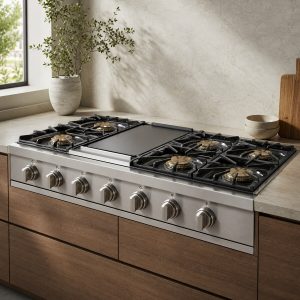
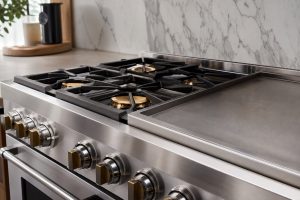
A rangetop is a professional-style cooking surface built into the counter, with the space beneath it free. The oven then goes elsewhere as a wall oven, built into a tall cabinet. It is two appliances, two supplies, and two openings for the cabinetmaker.
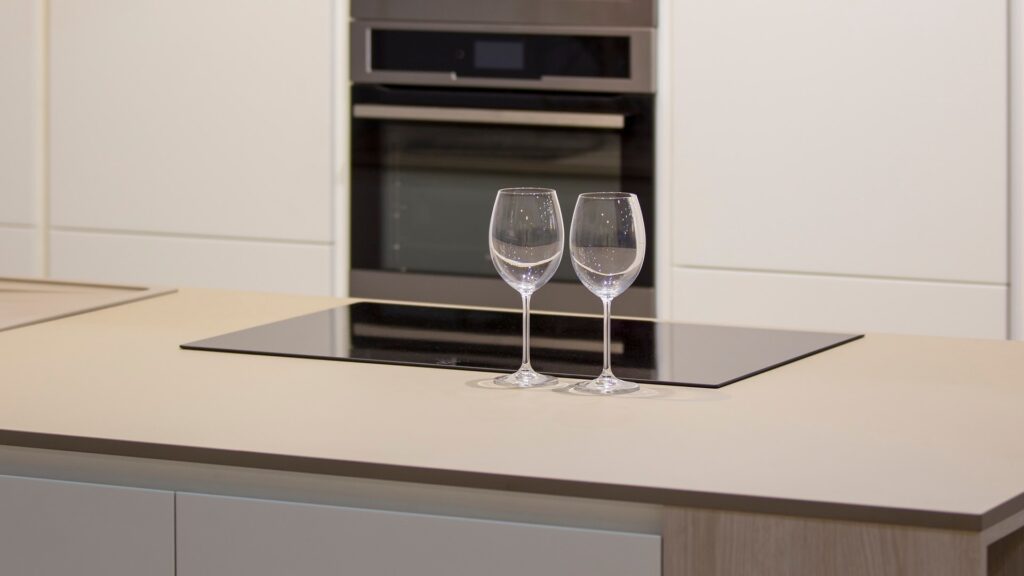
A third arrangement exists and is worth naming: a rangetop with nothing below it at all, in a kitchen where baking is rare. It is more common than people expect in households that cook on the surface daily and use an oven a few times a month.
The case for a range
- Cost. One appliance is almost always less than two of comparable quality, and the installation is one job rather than two.
- Simplicity. One gas connection, one electrical supply, one anti-tip fixing, one set of clearances.
- Replacement. A range slots into the opening the old one left. A rangetop and wall oven conversion means cabinetry work every time.
- Kitchen space. It does not consume a tall cabinet run, which in a small kitchen is the deciding factor.
- Resale familiarity. A conventional layout suits the widest range of buyers.
The trade-off is the one everyone knows: the oven is at floor level, and a heavy roasting pan comes out of it with a bend and a lift.
The case for a rangetop and wall oven
- Height. A wall oven at waist or eye level is easier and safer to load, and it is the reason most households make this change.
- Two ovens. A tall cabinet can take a double wall oven, which a single range opening cannot.
- Separation of work. Someone at the oven is not in the way of someone at the surface — meaningful in a kitchen where two people cook.
- Surface depth. Rangetops are typically deeper with fuller grates, and a separate oven leaves that surface uninterrupted.
- Staged failure. If the oven fails, the surface still works, and the other way round. With a range, a control fault can take out everything.
The costs are real: more money, more cabinetry, two sets of clearances, and a kitchen layout that has to have somewhere to put a tall oven cabinet without losing the counter run.
What the installation has to provide
The site’s pages on rangetop installation checks and oven installation checks cover what is verified in each case, and our guide to range installation covers the single-appliance path.
The questions that usually settle it
Who lifts the roasting pan? If anyone in the household has a back, knee or shoulder problem, a wall oven at height is not a luxury and the rest of the comparison rarely outweighs it.
How often is the oven used? A household that bakes weekly gains from the height every week. One that roasts twice a year gains very little and pays for it permanently in cabinet space.
Is the kitchen being rebuilt anyway? During a renovation the cabinetry cost of the split arrangement is absorbed into work already happening. Retrofitting it into a finished kitchen is a separate project with its own disruption.
How much counter is there? A rangetop needs its own run and a wall oven needs a tall cabinet. In a galley kitchen that is often simply not available, and a range is the answer by elimination rather than by preference.
How it looks years later, from a service van
Two patterns are worth knowing before you choose.
First, replacement is easier for a range. A rangetop and wall oven have to be replaced with models matching the existing cutouts and cabinet openings, and manufacturers change dimensions between generations. Households in this situation sometimes find that the straightforward replacement is not available and the cabinetry has to be altered.
Second, faults are more contained in the split arrangement. A shared control board in a range can take the whole appliance out at once; separate appliances fail separately. Against that, there are simply two appliances to maintain, and a wall oven’s cooling and venting depend on the cabinet around it in a way a freestanding range’s do not.
Neither pattern makes one choice right. They shift the decision from a showroom question to a kitchen one — how you cook, who cooks, what the room can give up, and how long you expect to live with it.
When to call
Call when you want an existing installation assessed before ordering, when a newly fitted appliance shuts down or bakes unevenly, when the cooktop or oven half stops working, or when you want to know whether the current cutouts will accept a replacement before the cabinets are touched.
We are an independent repair company and not a factory service arm. Pricing starts from a diagnostic visit and we confirm the estimate before any work begins. Bertazzoni rangetop repair covers burners, igniters, valves, elements and controls, and you can schedule a visit online.