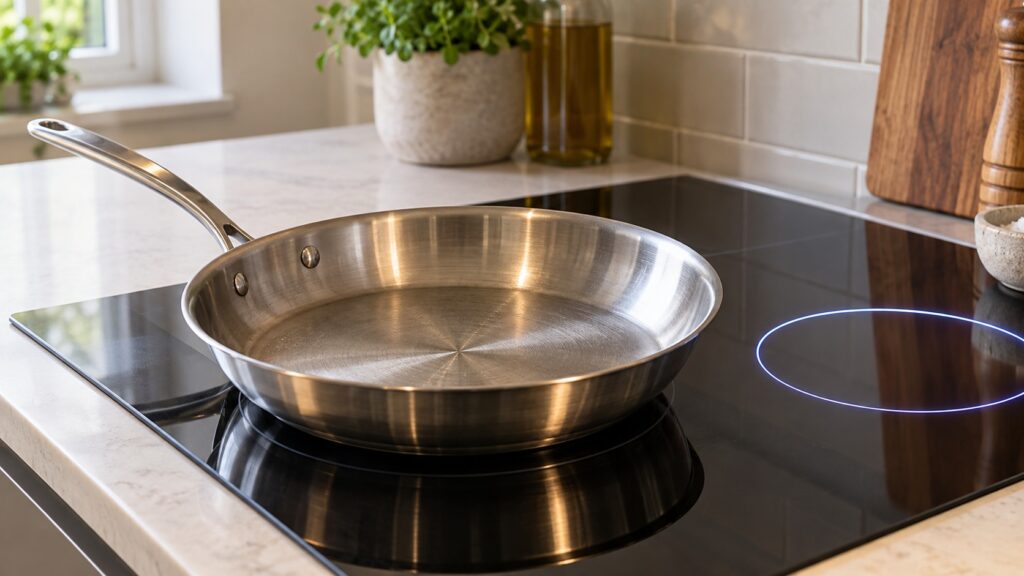
How Bertazzoni induction detects a pan is simple in principle: each cooking zone sits over a coil, and when a magnetic pan is placed on the glass the coil senses the change in its own electrical behavior and starts heating. When the pan is lifted, too small or not magnetic, the sensing no longer sees a proper load and the zone stays off or switches off, usually with a flashing symbol on the display. Understanding that handshake explains almost every “my zone will not heat” complaint on a new induction cooktop.
How does an induction zone know a pan is there?
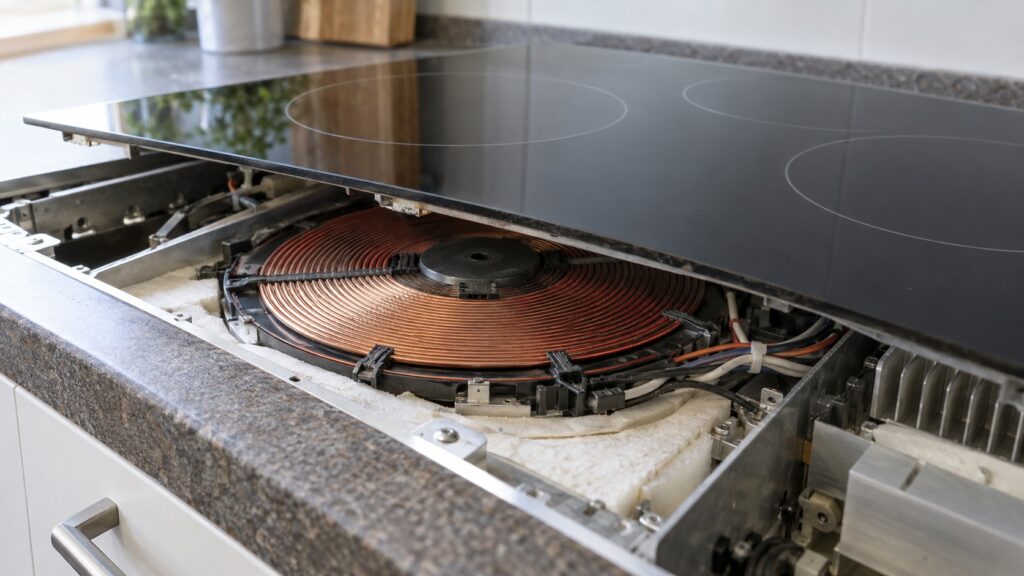
The coil under each zone carries a fast-alternating current, which creates a changing magnetic field above the glass. With nothing on the zone, that field has nothing to act on, and the electronics read a particular electrical signature from the coil. Place a magnetic pan on it and the field induces currents in the metal base; that pan loads the coil, and the signature changes in a way the controls can recognize. The cooktop uses that change as the signal that a suitable pan is present, and it only then lets real power flow into the zone.
That is why the glass stays cool in comparison with a radiant element: the heat is made in the pan, not in the cooktop, and the zone does not run at power unless something is on it. It is also why the cooktop reacts so quickly when a pan is lifted off the zone. For the wider picture of how the cooktop is built, our Bertazzoni cooktop systems guide covers the coils, the controls and the fans together.
What makes a pan suitable?
Three things count: the base must be magnetic, flat and big enough. A magnet that sticks firmly to the base is the quickest test. Cast iron and many stainless steel pans pass, while pure aluminum, copper and glass usually fail unless they have a magnetic layer built into the base. A pan with a warped or domed bottom makes poor contact and can be detected weakly or inconsistently. Pans that are much smaller than the zone may not give the sensor enough of a signal to start.
The size threshold is why a small milk pan may be ignored on a large zone. Try the pan on a smaller zone, or check your manual for the minimum pan size for each zone. Manuals for your model give the exact guidance, and it can differ by zone size.
Cleanliness helps too. Burnt-on food on the glass, a rough or scratched pan base and moisture between the two all reduce contact and can make the zone hesitate before it starts. Wipe both surfaces, set the pan down gently and center it over the zone marking. Those two habits fix more “not detected” complaints than any repair we are called to.
What does a flashing symbol or no-heat zone usually mean?
Most of the time it means the cooktop did not find a suitable pan, and the display is telling you so. Many induction cooktops flash a symbol on the zone display when they are waiting for a pan, and some switch the zone off after a short time if none appears. Check the cookware first, then check that the pan sits fully on the zone and not overlapping the edge, and that the glass and the pan base are clean and dry. A film of grease or a wet base can confuse the sensing.
If the cookware is right and the zone still will not start, the next suspects are on the cooktop side. Our symptom pages on cooktop pan not detected and on an induction range zone not detecting a pan set out the checks. We keep the meaning of specific fault codes on those pages, so refer to them for anything beyond the pan basics.
Why do the fans and the touch controls matter?
Induction electronics make heat of their own and rely on cooling fans below the glass to stay in their working range. A fan that runs loudly after cooking is normal; a cooktop that shuts down or limits power because of heat may be telling you something is blocked or failing. Our guide to the ER21 and ER03 touch control faults shows how Bertazzoni reports control problems, which are separate from the pan sensing described here.
Touch controls also have a say. Moisture or a cloth left on the control area can register as a press and disrupt operation, so wipe the glass dry and keep the controls clear. A zone that behaves strangely only when you touch certain areas of the panel is more likely a control issue than a sensing issue.
How does the power supply affect detection?
Induction cooktops draw heavily from a dedicated circuit, and a weak or incorrectly wired supply can lead to power limiting, cutouts or errors that look like detection problems. Our guides on the Bertazzoni cooktop U400 power connection and induction rangetop electrical requirements explain what the installation needs to provide. If a new cooktop never worked properly, the supply is worth checking before you replace anything.