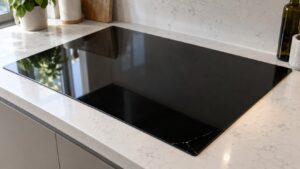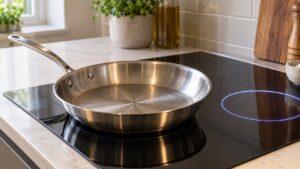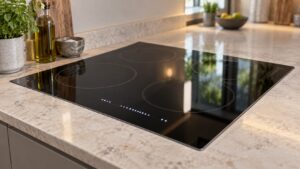
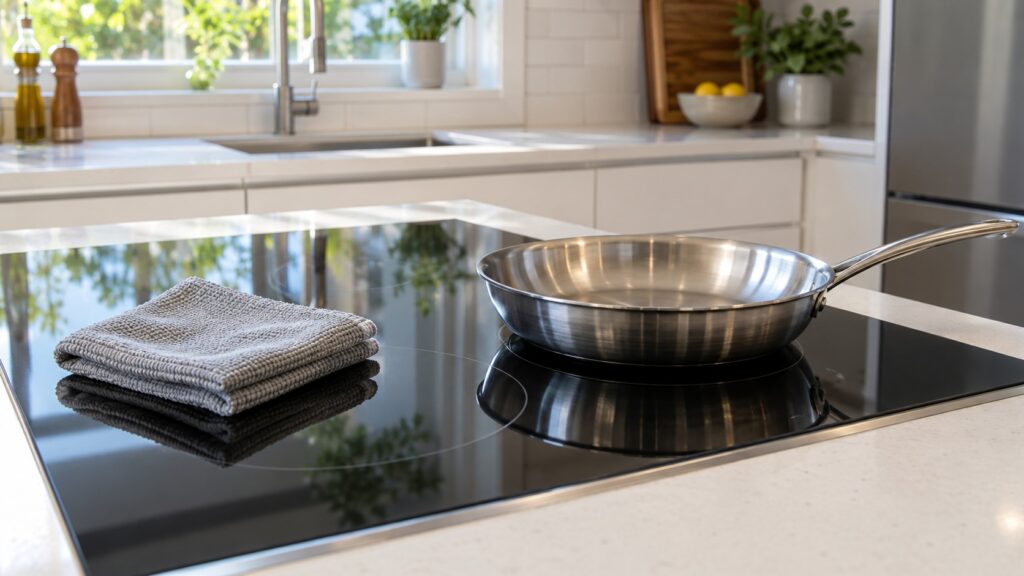
The best Bertazzoni induction cooktop glass care tips are simple habits: lift pans instead of sliding them, wipe spills once the glass has cooled, clean with a cooktop cleaner and a soft cloth, remove burnt sugar quickly and carefully, and stop using the cooktop at once if the glass cracks. The glass on an induction cooktop is strong but not indestructible, and most damage comes from three things: grit under a pan, sugar that has burned onto the surface, and a heavy impact from a dropped pot. Our model list includes induction cooktops such as the PE244INDXV, PE304INDXV and PE365INDXV, and the habits below apply to all of them.
How should you clean induction glass every day?
Wait until the glass has cooled and the hot surface indicator has gone out. Induction cooktops heat the pan, not the glass, but the glass still warms from the pan and stays warm for a while. Wipe off loose crumbs with a soft cloth, put a few drops of a cooktop cleaner made for glass-ceramic surfaces on the glass, rub in small circles with a damp cloth or a paper towel and buff dry with a clean cloth.
Avoid dish soap used to excess, since it can leave a film that streaks, and avoid glass cleaners with ammonia unless your manual allows them. Keep the control area dry: the touch controls sit in the glass, and water pooled around them can cause the controls to misbehave. If you want the general routine for every Bertazzoni cooktop type, our Bertazzoni cooktop cleaning and maintenance guide covers it.
What is the right way to remove burnt-on food?
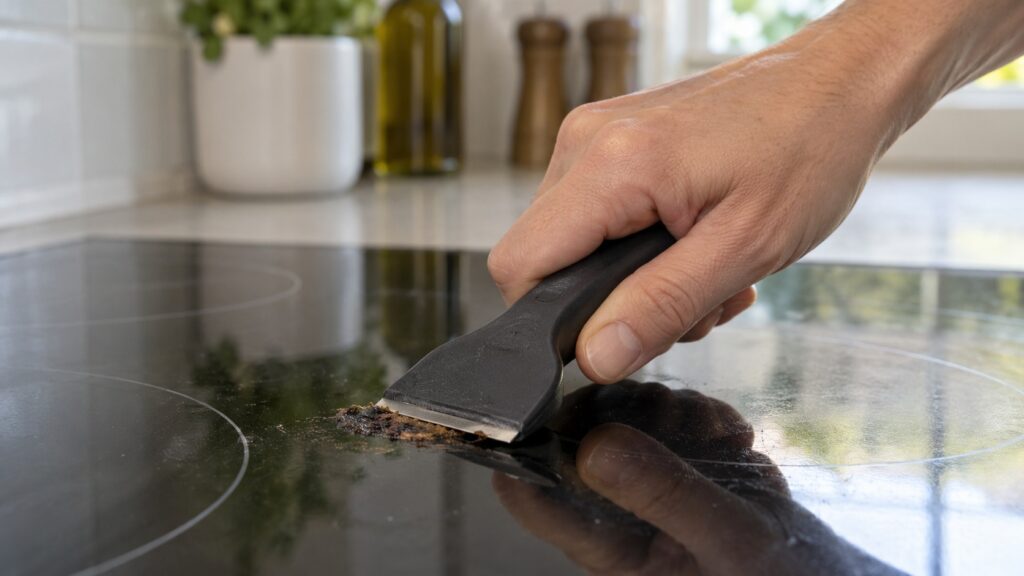
Soften it first. Put a little cooktop cleaner on the spot and let it work for a few minutes, then lift the residue with a plastic scraper held at a low angle. A single-edge razor scraper held at a shallow angle is a common tool for glass-ceramic surfaces, but check your manual before you use one on yours, and never use it on a cold, dry surface or press hard.
Finish with the usual cleaner and a soft cloth. Do not scrub with a rough sponge, steel wool or powdered cleanser, which leave fine scratches that collect dirt and are visible forever. Scratches are cosmetic in most cases, but they spoil the look and show up under the light.
Why are sugar spills a special case?
Sugar and anything with a high sugar content, such as jam, syrup or some sauces, can burn into the surface and, as the glass cools, can pull a tiny piece of glass away with it. That is the pitting some owners notice. The fix is speed: switch off the zone, and, with an oven mitt and a plastic or razor scraper, push the spill off the glass to a cool part of the cooktop while it is still soft, then clean it later.
Melted plastic, such as a bag or a cooking utensil, behaves the same way. Treat it as soon as you can do so safely, and do not wait for the glass to cool completely before moving it. Our guide to how a Bertazzoni induction cooktop detects a pan explains why a pan placed over a spill can also cause detection problems.
How do you protect the glass from scratches and impact?
Lift pans, do not slide them. Grit on the base of a pan, or on the glass itself, acts like sandpaper, so wipe the bottom of each pan before you set it down and keep the glass clean. Use pans with flat, smooth bases, since rough cast iron and warped pans scratch more and heat less evenly. Avoid dropping heavy pots or lids onto the glass, and do not use the cooktop as a cutting board or a shelf.
Take care with the edges and corners too. A pan knocked against the edge of the glass is a common source of chips. If you must slide something heavy, use a trivet on a different surface. For wider guidance on protecting other finishes on a Bertazzoni range, see our Bertazzoni range finish care tips.
How often should you clean the glass?
Wipe the surface after every cooking session while it is still faintly warm, and give it a proper cleaner treatment once a week or whenever a film builds up. Regular light cleaning is far easier on the glass than an occasional hard scrub, and it keeps the touch controls responding properly, since residue and moisture around the sensors are common reasons they hesitate.
What should you do if the glass cracks or a control misbehaves?
A cracked or chipped glass is a safety issue, because liquid can reach the electronics under it. Switch the cooktop off at the breaker and stop using it, even if it still seems to work, and arrange a visit. Do not try to seal or tape the crack.
If the controls misbehave after a spill, dry the glass thoroughly and try again once it has cooled. Controls that stay unresponsive may be showing a fault, and our guide to Bertazzoni cooktop ER21 and ER03 touch control faults explains the codes. Our Bertazzoni cooktop repair page describes what a visit includes.