
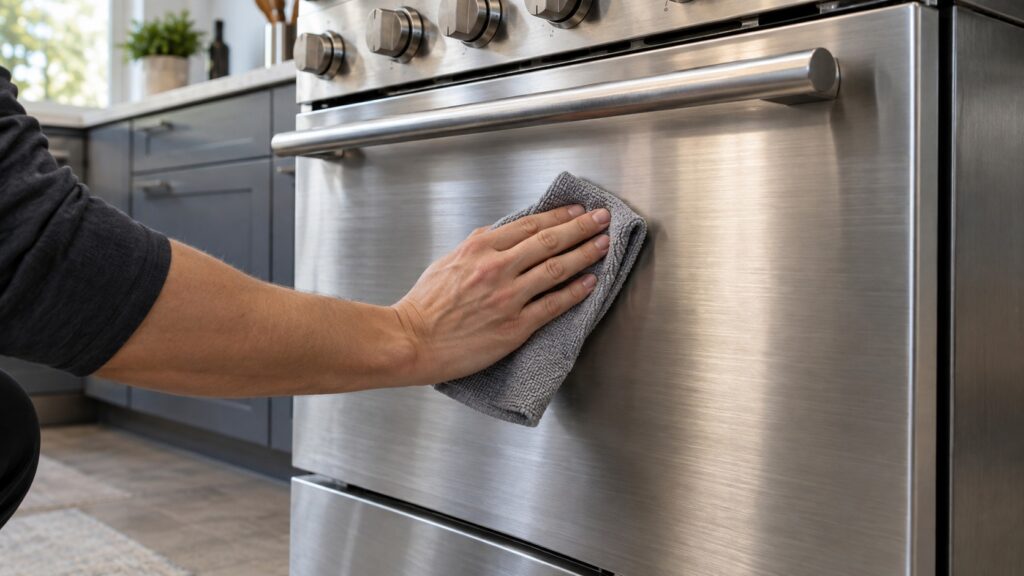
Bertazzoni range finish care comes down to three habits: clean with a soft cloth and mild soap and water, wipe in the direction of the grain on metal and dry afterward, and avoid anything abrasive, bleach-based or oily unless your manual says it is safe for your specific finish. Bertazzoni ranges come in stainless steel, matte carbon-style and colored enamel finishes, and the last letters of the model number tell you which you own, so confirm that before you reach for a cleaner.
How do you know which finish your Bertazzoni range has?
Look at the end of the model number. The letters after the size and configuration name the finish: our Bertazzoni model number decoder explains that endings such as XV, XT, CAT, BG and XG separate stainless from black, from carbon, from the colored enamels. That one detail decides how you should clean, so write it down. If the plate is hard to reach, the paperwork that came with the range or a quick look at the model page for your number will tell you.
Finishes also vary within the same range. A stainless body can be paired with brass or chrome knobs, and a colored enamel door can have a metal handle. Treat each material by its own rules, and clean the most delicate one first.
How should you clean a stainless steel Bertazzoni range?
Use warm water with a few drops of mild dish soap, a microfiber cloth and a second dry cloth. Wipe in the direction of the grain, which is visible as faint lines in the metal, because wiping across it can leave streaks and dull the pattern. Rinse the cloth often, then dry the surface so water does not leave spots. For fingerprints, a cloth lightly dampened with a little white vinegar or a cleaner approved in your manual works, followed by a rinse and a dry wipe.
Avoid chlorine bleach and cleaners with chlorides, which can pit stainless over time, and never use steel wool or scouring pads, which scratch the grain permanently. If a spill dries on, lay a warm wet cloth over it for a few minutes to loosen it instead of scrubbing. Our general Bertazzoni range cleaning and maintenance guide covers the rest of the routine.
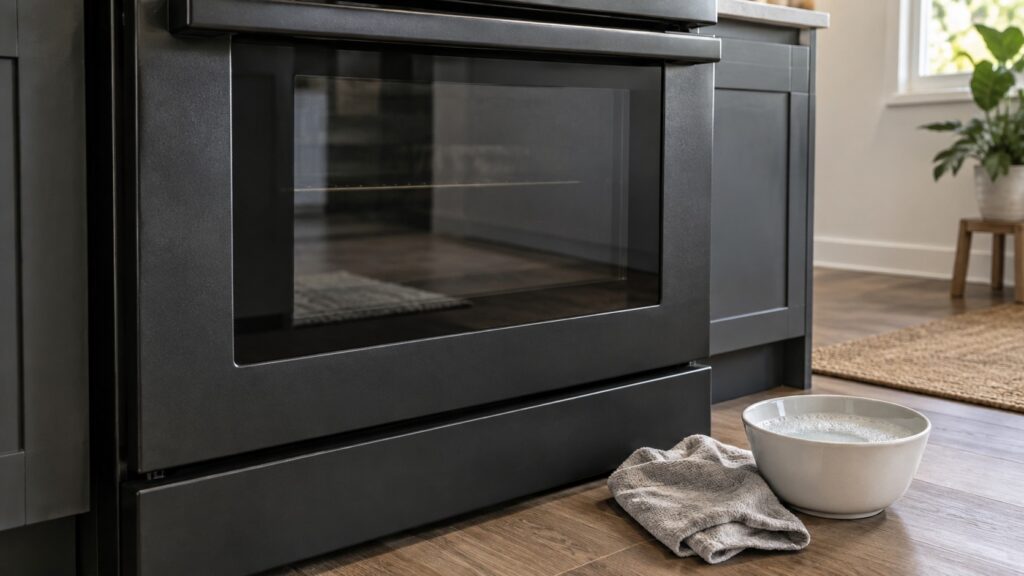
What is different about matte and carbon-style finishes?
Matte finishes look beautiful and need a lighter hand. They do not have a grain to follow, and they show oils, fingerprints and polish residue more readily, because the surface is not designed to reflect. Clean with a soft damp cloth and a drop of mild soap, wipe gently and dry. Do not use stainless polish, baby oil, olive oil or glass cleaner on a matte surface, since they can leave patches that are hard to even out.
If you see a mark that will not come off with mild soap, stop and check your manual before trying something stronger. A stronger cleaner can alter the sheen of a matte surface permanently, and a patch that looks different from its neighbors is hard to fix. Test any new cleaner on a hidden area first, such as a low edge of the kick panel.
How do you look after colored enamel, knobs and handles?
Enamel is tough but not indestructible. It can chip if struck and scratch if scrubbed with grit, and strong acids can dull it. Wipe it with a soft cloth and mild soapy water, and clean up acidic spills such as tomato sauce and citrus juice promptly. Keep abrasive pads, scouring powder and oven cleaners away from it.
Knobs and handles deserve a separate mention. Wipe them with a damp cloth, and do not spray cleaner on or around the knobs, because liquid can run down the stem into the controls. Spray the cloth, not the range. For the burner end of the range, our guide to burner caps and cast iron grate care covers parts that need quite different treatment from the painted or plated surfaces.
What habits protect the finish day to day?
Wipe up spills once the surface has cooled, because dried sugars and acids are far harder to remove and can mark the finish. Use the hood when you cook so grease and steam do not settle on the surfaces, and keep a dedicated soft cloth for the range so no grit gets rubbed in. Do not slide cookware across the cooktop or drag heavy items over the front of the range.
Check the oven door and the front of the range after cleaning for any lingering film, and dry the edges where water collects. If you are choosing a finish for a new range, remember that every finish has a care routine, and the easiest one is the one you will actually follow. Our oven cleaning and maintenance guide covers the inside of the oven.
Finally, build a small routine rather than waiting for a deep clean. A thirty-second wipe after cooking while the surface is still warm to the touch, a weekly pass over the door, handle and control area, and a monthly check of the less visible edges and kick panel keep the finish looking new for years. Most damaged finishes we see were not worn out by use; they were scoured by a well-meaning cleaning day.