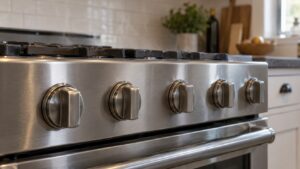
Bertazzoni burner cap and grate care decides how a professional-style cooktop looks and how it behaves, and the two are connected more closely than people expect. Almost every complaint about flame quality on a gas range — yellow tips, a burner that lights unevenly, one that will not light at all — begins with a cap, a head or a grate that is dirty, wet or sitting slightly out of position. Cleaning them properly is maintenance and diagnosis at the same time.
The parts, and which of them tolerate what
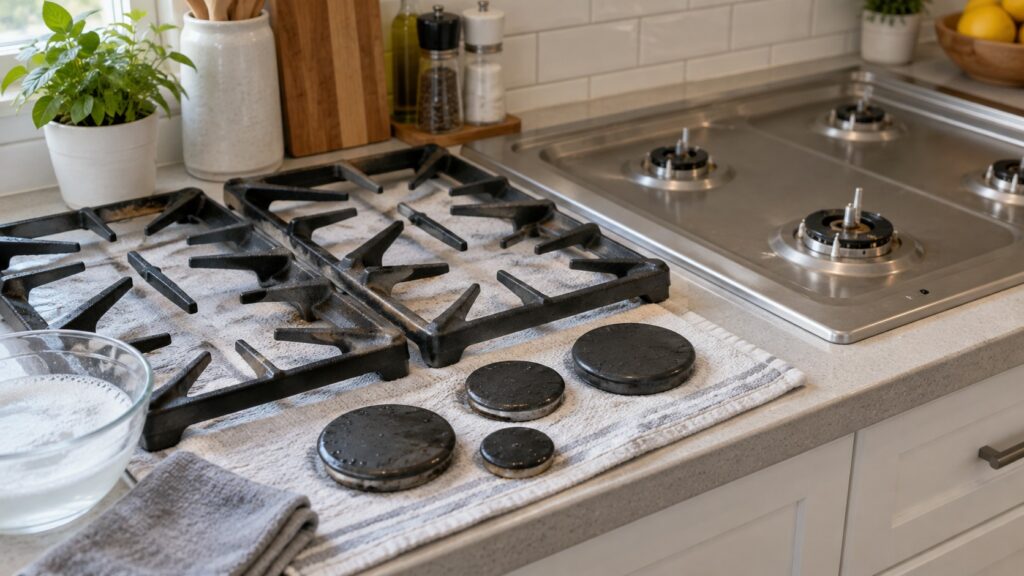
Grates. Cast iron, usually with a matte enamel or a coating. They tolerate hot soapy water and a nylon brush. They do not tolerate abrasive pads, which take the finish off and leave iron exposed to rust. Whether they can go in a dishwasher depends on the finish, and the general answer for coated cast iron is no — detergent dulls the coating over repeated cycles even when nothing visibly happens the first time.
Burner caps. Enameled or brass depending on model and burner. Soak in hot soapy water, use a nylon brush, dry completely. Brass discolors with heat, and that discoloration is normal and permanent; trying to polish it away with an abrasive or an acid cleaner damages the surface for good.
Burner heads. The part with the ports, usually left in place. Brush the ports clear, and if a head is removable, wash and dry it the same way as a cap. Metal picks are risky — a port enlarged even slightly changes the flame at that point permanently.
Igniters. The ceramic electrode beside each burner. Wipe gently, never soak, never scrub. A cracked ceramic body means the igniter needs replacing.
The surface. Stainless wiped along the grain with a dedicated cleaner; enamel with soapy water. On stainless, never leave an acidic cleaner or a salty spill sitting — both etch.
The routine that prevents most faults
Do this weekly and most ignition calls never happen:
- Cold cooktop. Lift the grates off and set them aside.
- Lift each cap. Note how it sits — most have a locating feature, and refitting one rotated is a real cause of uneven flames.
- Wash caps and grates in hot soapy water with a nylon brush. Rinse.
- Brush the ports on each head while everything is off. Hold a light at an angle: a blocked port is visible as a dark slot among lit ones.
- Wipe the cooking surface, working around the igniters rather than at them.
- Dry everything completely. Give brass and cast iron extra time, or dry them with a towel.
- Refit the caps flat and seated, then the grates.
After a heavy spill, add one step: check whether anything ran under the cap of a neighboring burner. Liquid migrates, and the burner that misbehaves afterward is often not the one that was spilled on.
Reading the flame
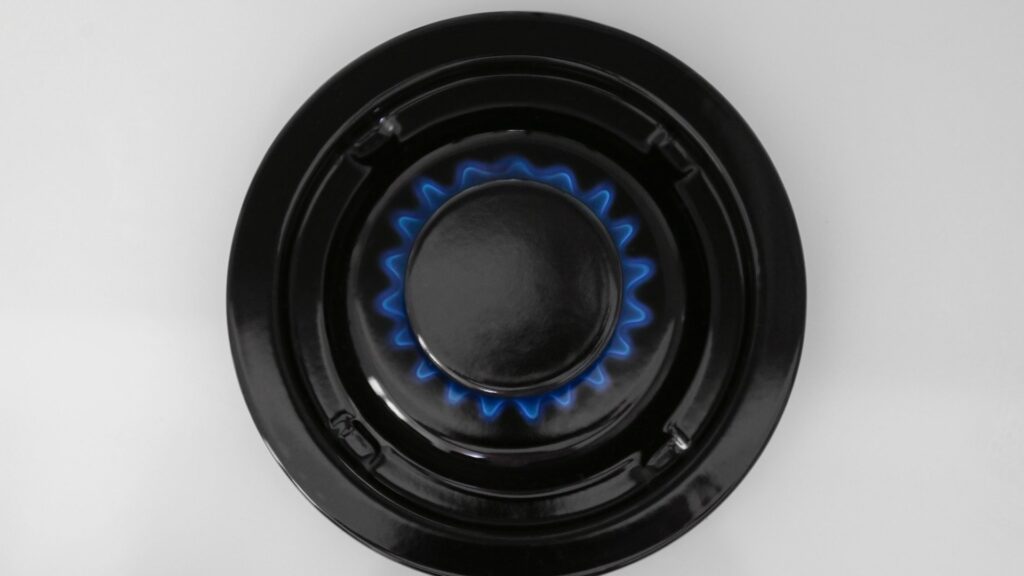
A correctly burning gas flame is mostly blue with a defined inner cone. Reading it is the fastest diagnostic available and it costs nothing.
One caution about cleaning products near flames: leave nothing behind. A film of cleaner in a port burns with its own color and produces exactly the yellow tipping people then try to clean again.
What a dishwasher does to these parts
It is tempting, and it is where most avoidable damage comes from. Dishwasher detergent is alkaline and aggressive by design, and the cycle is long and hot.
- Coated cast iron grates come out dull, and the dulling is cumulative and permanent. After enough cycles the coating is thin enough that rust starts at the pan-contact points.
- Brass caps discolor unevenly and can develop a chalky surface that no polishing restores.
- Enameled caps survive better, but the steel rim under the enamel does not, and a chipped rim rusts from underneath.
Hot water, dish soap and a nylon brush do the same job in a few minutes without any of that. Where something is genuinely baked on, soaking for an hour beats any amount of scrubbing, and it does not risk the finish.
Grates: keeping cast iron from rusting
Enamel and coatings protect the iron beneath, and both get damaged over time at the points where pans slide and where the grate meets the surface. Once bare iron is exposed, water left on it rusts within a day.
The practical answer is drying rather than treating. Dry grates thoroughly after washing — a warm oven that has just been switched off is a good place to leave them for a few minutes. If a small bare patch has appeared, keep it dry and oiled very lightly with cooking oil rather than attempting a repair coating, which will not survive the heat. The site’s cleaning and maintenance guide covers the broader schedule, and the cooktop guide deals with built-in surfaces.
When to call
Call when a burner still will not light with clean, dry, correctly seated hardware; when every burner is yellow or weak at once; when flames lift away from the ports; when clicking continues after everything is dry; or when a burner goes out as soon as the knob is released.
We are an independent repair company and not a factory service arm. Pricing starts from a diagnostic visit and we confirm the estimate before any work begins. Bertazzoni range repair covers burners, igniters, valves and controls, and you can schedule a visit online.