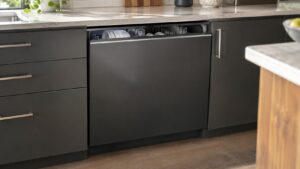
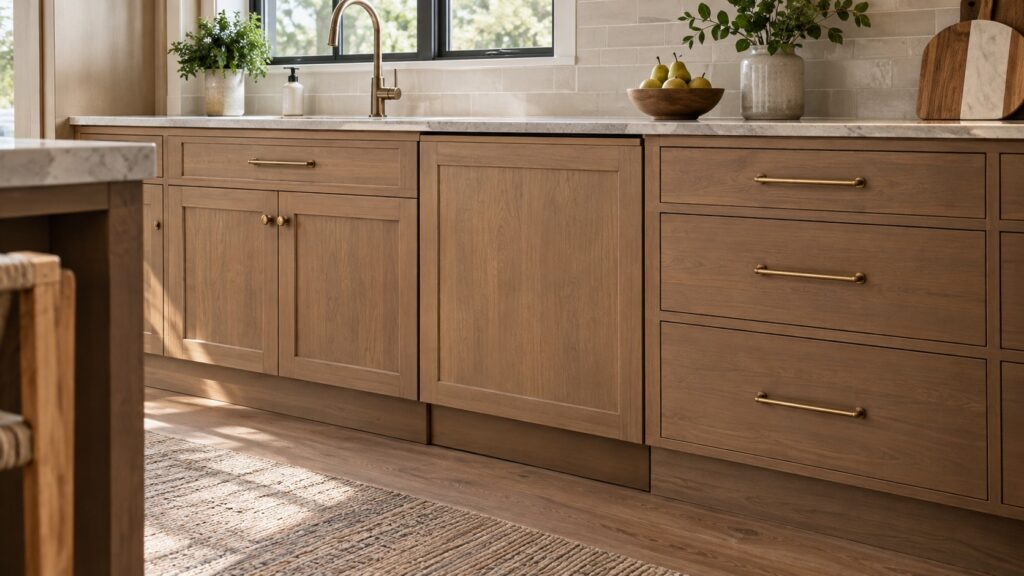
TL;DR: Several Bertazzoni dishwasher model numbers exist in two versions that differ by exactly one letter — a P or an X — and that single letter decides whether the door takes a custom cabinet panel or ships with a stainless front. Everything else on the machine, including how it drains and how it is serviced, stays the same. Buying the wrong letter means living with a front you did not plan for, or paying for a panel kit you never needed. This guide is for anyone comparing a bertazzoni panel-ready dishwasher against its stainless twin before a kitchen order is placed.
What does the P or X in a Bertazzoni dishwasher model number actually change?
Look at the site’s own model list side by side: DW18S2IPV sits next to DW18S2IXV, and DW24T3IPV sits next to DW24T3IXV. Every character before the last letter is identical — same width, same series, same control generation. Only the final letter changes, from P to X. That is the panel-ready versus stainless-front split, and on a Bertazzoni dishwasher it is the only difference the model number is telling you about. The tub, the pump, the rack layout and the control board behind the door are the same part numbers either way.
This matters because shoppers often assume a different letter means a different generation or a cheaper build. It does not. A panel-ready DW24T3IPV and its stainless twin DW24T3IXV run the identical wash system; the letter only tells the installer what kind of door front to expect when the unit arrives.
Which Bertazzoni dishwasher models come in both finishes, and which only in one?
The 18-inch and 24-inch lines each carry a matched panel-ready and stainless pair. The 24-inch tall-tub variant, DW24T3IPT-26, is listed only as a panel-ready model on this site’s own model records — there is no stainless twin for that particular control generation. If a kitchen was designed around a cabinet-matched dishwasher in the tall-tub line, that limits the choice before finish is even discussed; the stainless option simply is not offered on that specific model.
Does panel-ready change how the dishwasher gets serviced later?
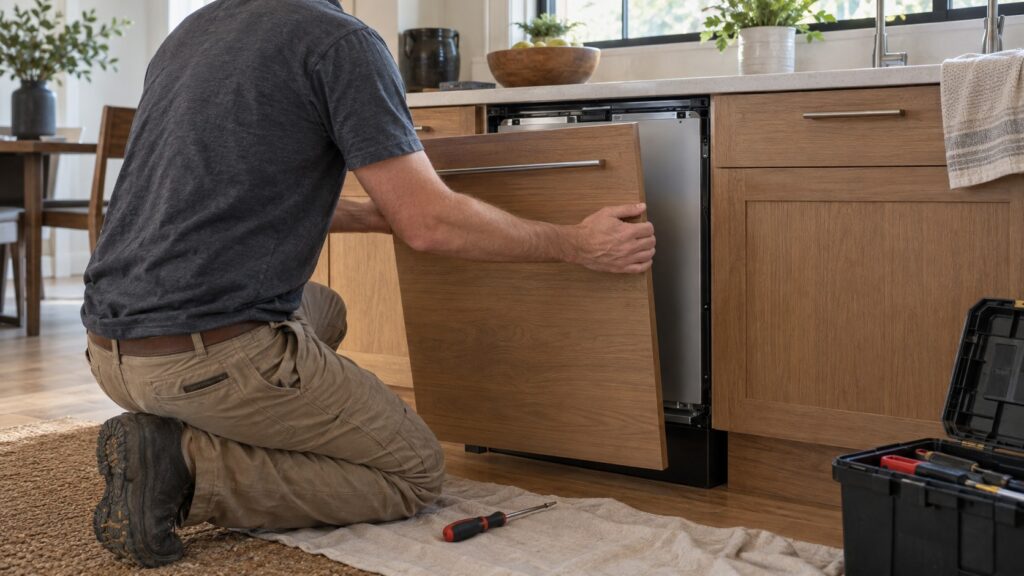
No, and this is the detail that buying guides for other brands often skip. A panel-ready Bertazzoni dishwasher hides its door behind a custom panel, but the latch, the door switch, the water inlet valve and the drain pump sit in the same places as on the stainless version. A technician still opens the kick panel at the bottom, still pulls the same filter assembly, and still reaches the same control board behind the door. The only added step on a panel-ready unit is removing the cabinet panel itself before the door skin comes off — an extra five minutes, not a different repair path.
Where panel-ready does add friction is access on day one: if the panel was installed with adhesive rather than the factory bracket kit, removing it without damage takes more care. That is worth asking your installer about specifically, because it affects every future service call, not just the first one.
Is paying for panel-ready worth it if you already have stainless appliances?
If the rest of the kitchen is stainless, the stainless-front model is almost always the simpler and less expensive buy — there is no panel to source, size or align. Panel-ready earns its keep in a specific situation: a run of cabinetry where every door front, including the dishwasher, is meant to disappear into matching wood or lacquer. Buying panel-ready and then never installing a matching panel leaves an unfinished-looking gap on an otherwise built-in dishwasher, which is a common and avoidable mistake.
Panel weight is also a real consideration. A heavy custom panel adds load to the door spring and hinge that the factory calibrates for a specific weight range; a panel far outside the recommended range can make the door swing too fast or too slow, which is a nuisance long before it becomes a repair.
What should you confirm before ordering a panel-ready model?
Three checks save the most trouble later. First, confirm your cabinet maker’s panel weight against the machine’s stated allowance — heavier custom panels sometimes need a spring adjustment at installation. Second, confirm the exact model suffix with your dealer rather than the family name alone, since the tall-tub DW24T3IPT-26 does not have a stainless counterpart and a mid-project switch to stainless means a different model entirely. Third, decide the panel attachment method (bracket versus adhesive) before delivery, because that decision is what makes the first future service call fast or slow.
How do you decide between the 18-inch and 24-inch panel-ready models?
Width is the more consequential decision than finish. The 18-inch DW18S2IPV suits a narrow galley kitchen or a secondary prep-sink dishwasher; the 24-inch DW24S3IPV and DW24T3IPV carry a standard full rack set. Once width is settled, the panel-ready decision is really about the cabinetry plan rather than the dishwasher itself — the wash performance, cycle options and rack layout do not change between the panel-ready and stainless versions of the same width and generation.
It helps to think of the decision in two separate layers instead of one. The first layer is the machine: width, tub depth, rack configuration and control generation, which is what the numbers and letters before the final P or X describe. The second layer is the front: panel-ready or stainless, which is what the final letter alone describes. Treating these as one choice is what leads buyers to assume a stainless model is somehow a lesser machine, or that a panel-ready model must cost more to service — neither is true on this lineup.
What happens if a kitchen designer specifies the wrong letter by mistake?
This is more common than it sounds, because a panel-ready and stainless pair often appear on the same spec sheet one line apart, and a single mistyped character is easy to miss during a busy remodel order. If a panel-ready DW24T3IPV was ordered but the cabinetry was never designed with a matching panel in mind, the simplest fix before installation is to exchange it for the stainless DW24T3IXV rather than force a mismatched panel onto a door built for one. After installation, exchanging the front is far more involved, since the door skin, the spring calibration and sometimes the handle hardware are matched to the front type at the factory. Catching the letter at the order stage, not at delivery, is the cheapest place to fix this.
A useful habit for anyone finalizing a kitchen order is to read the model number twice, once for the width and series, and once specifically for the last letter, before signing off on the purchase order. That second pass is what actually prevents the mismatch.
If you are weighing a Bertazzoni dishwasher against keeping an older unit running, our dishwasher repair-or-replace guide covers that decision separately from the finish question. For day-to-day upkeep once the model is chosen, see our dishwasher cleaning and maintenance guide.
We are an independent repair company and do not sell appliances, but we service both panel-ready and stainless Bertazzoni dishwashers across the same model families described here, and pricing for any visit starts from a diagnostic call confirmed before work begins. If a dishwasher you already own needs a look, schedule Bertazzoni dishwasher repair or book a visit with the model number in hand.