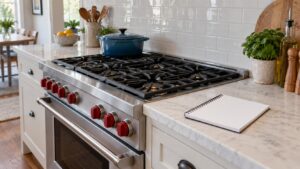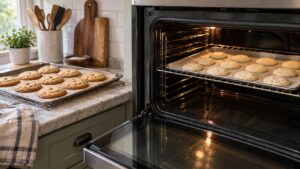
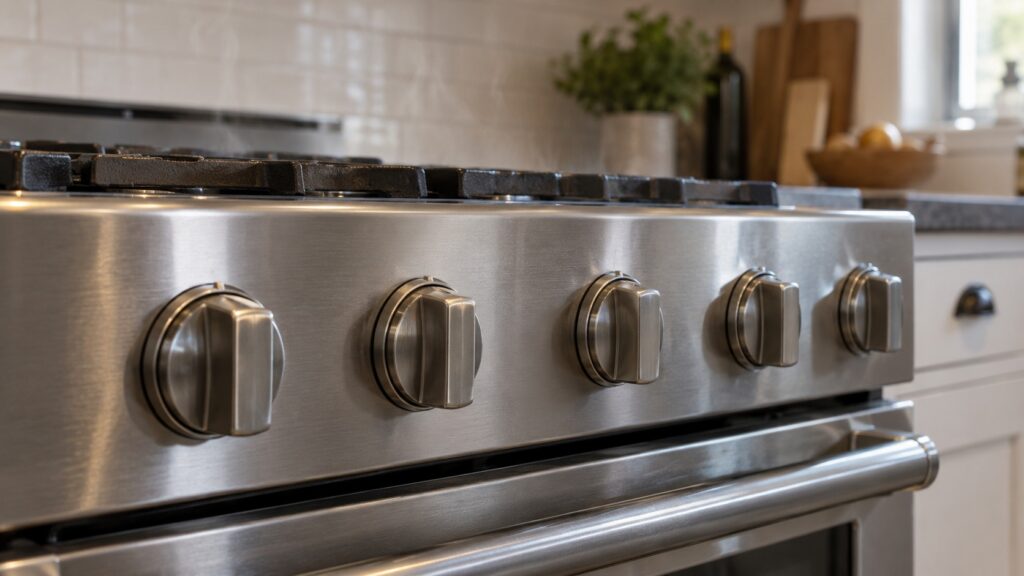
A Bertazzoni stove cooling fan not working is a heat problem more than a cooking one: the oven can still heat, but nothing is removing the heat from around the controls and the cabinets, so the range slowly overheats. The cooling fan is a separate fan from the convection fan inside the oven. It pulls air through the range to keep the control panel, the knobs and the surrounding cabinetry from getting too hot, and it normally keeps running for a while after the oven is switched off. The usual reasons it stops are a blocked vent, a failed fan motor, a switch or sensor that does not tell it to run, or a connection that has come loose. Stop long bakes until you know which it is.
What does the cooling fan do, and how is it different from the convection fan?
The cooling fan sits outside the oven cavity, behind or above the control panel, and moves air through the body of the range. Its job is to protect the control electronics, the knobs and the cabinets around the range from the heat of the oven. The convection fan is inside the cavity and moves hot air around the food. They are different parts with different jobs, and a failure of one does not mean the other has failed.
You can tell them apart by what you hear. The cooling fan runs outside the oven and is usually a gentle whoosh at the vent that continues after the oven is off. The convection fan runs inside the oven in certain cooking modes. Our guide to convection fan versus cooling fan noise explains how to separate the two sounds, and our guide to how Bertazzoni oven cooking modes work explains when the convection fan runs.
How can you tell the cooling fan has stopped?
After the oven has run at a moderate temperature for half an hour, listen near the vent and the control panel. A fan that is working makes a steady airy sound, and warm air leaves through the vent. If it is silent and the front of the range is warmer than usual, the fan has probably stopped. Another clue is the afterrun: with a healthy fan, the whoosh continues for a while after you turn the oven off, and with a dead fan it stops the moment the oven goes off.
Other signs include knobs that are too hot to touch, a control panel that feels warm, a display that flickers, and an oven that cuts out part way through a long cycle. Take any of these seriously. Heat that is not removed shortens the life of the electronics and can trip a protective shutdown. For the opposite complaint, a fan that keeps running too long, see our symptom page for an oven cooling fan that runs too long.
Could the vents be blocked?
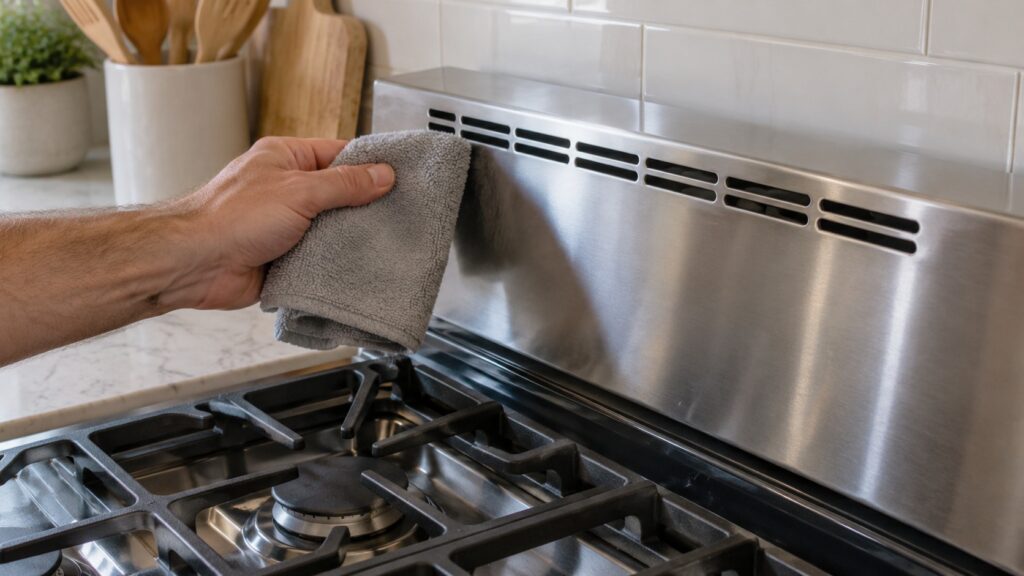
This is the first and simplest cause. The cooling fan needs a clear path in and out of the range, and anything that covers the vents turns a healthy fan into a useless one. Foil laid across the oven floor or over the vent, a tray pushed against the back, a towel hung over the handle or the top of the range, or a line of grease and lint at the vent opening can all stop the air from moving.
Check that the vents on the top, the back and the front are clear, and remove anything that covers them. Wipe visible lint away with a vacuum hose or a dry cloth when the range is cold. After that, run the oven at a moderate temperature and listen again. If the fan starts moving air, you have found the cause. If not, the fan or its control is at fault.
Could it be the fan motor, a sensor or a connection?
If the vents are clear and the fan is silent, the cause is probably electrical. The fan motor itself can fail, usually after years of running at high temperature. A thermal switch or sensor that tells the fan when to run can fail open and never send the signal. A connector that has worked loose or been scorched by heat can drop the fan out intermittently. And, less often, the control board may not be switching the fan on.
A technician tests these in order, usually by checking for voltage at the fan and then testing the switch. This is not a job for the owner, since the fan sits behind panels with live wiring and sharp metal. If your range also cuts out mid-cycle, our guide to a Bertazzoni gas oven that shuts off mid-bake covers the related causes.
What should you do in the meantime?
Avoid long, high-temperature cooking until the fan has been checked. Use the oven for short jobs at moderate temperatures, let it cool fully between uses and keep the area around the range clear. Do not use the self-clean cycle with a suspect cooling fan, because it generates the most heat of any oven mode. Switch the range off at the breaker for a couple of minutes to reset the control, and try again.
Write down what you noticed: how long the oven had been on, what the front of the range felt like, whether any sound had changed recently and whether the oven shut off by itself. That log lets a technician bring the right fan and switch. Our Bertazzoni oven troubleshooting checklist shows what else to note, and our Bertazzoni range repair page explains a visit.