TL;DR: A Bertazzoni wine refrigerator compressor that runs constantly is not automatically a sign the whole unit needs replacing — most of the time it means airflow around the condenser coil is blocked, the room is warmer than the unit was rated for, or the compressor is aging but still functional. Whether it is worth repairing instead of replacing the unit comes down to the compressor’s age, how the unit is used, and what a sealed-system repair would actually cost against the price of a comparable replacement.
Does a compressor that runs constantly always mean it needs to be replaced?
No. A compressor’s job is to run until the cabinet reaches its target temperature and then cycle off, and several common conditions can keep it running well past that point without the compressor itself being at fault. A condenser coil coated in dust cannot shed heat efficiently, so the compressor keeps working to compensate. A room noticeably warmer than the unit’s rated ambient range — a wine refrigerator installed near a range, a dishwasher, or in an unconditioned space — forces the same compensating behavior. A door seal that no longer holds a tight seat lets warm air leak in continuously, which reads exactly like a struggling compressor from the outside. All three of these are worth ruling out, and all three are simpler and cheaper than a compressor repair.
How do you tell an aging compressor from one of the simpler causes?
The simpler causes tend to leave other clues: a visibly dusty coil, a unit installed close to a heat source, or a door that does not close firmly and audibly on its own. If those are ruled out and the compressor still runs nearly continuously, cycles unusually short and often rather than in normal longer runs, or makes a noticeably different sound than it used to — a harder knock, a louder hum, a new rattle — that points toward the compressor itself or the sealed refrigerant system around it rather than something fixable by cleaning or a seal swap. A unit that is not holding temperature at all, alongside the constant running, strengthens that conclusion further.
What does a compressor or sealed-system repair actually involve?
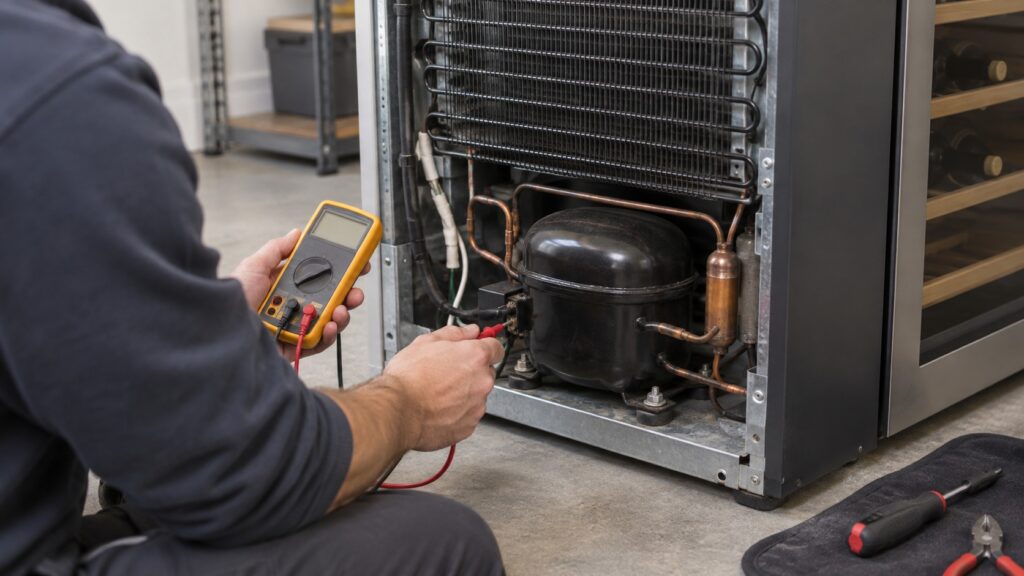
The compressor sits inside a sealed refrigerant circuit, which means a genuine compressor repair is not a simple part swap the way replacing a door seal is. It typically involves recovering the existing refrigerant, replacing the compressor itself, and recharging the system correctly for that specific unit — work that takes real diagnostic time and specialized equipment, and that cost adds up compared with most other repairs on this appliance type. That is exactly why the repair-versus-replace question matters more here than it does for a filter, a fan, or a light.
When does repairing the compressor make more sense than replacing the unit?
A relatively young unit, still within a reasonable service life, with a compressor fault confirmed as the actual cause after the simpler possibilities are ruled out, is generally worth repairing — the unit’s cabinet, shelving, glass door and electronics all remain useful, and only the sealed system needed attention. This is the same logic that applies to a kitchen refrigerator’s compressor: replacing one working, structurally sound appliance because of a single failed component is rarely the economical choice if the repair cost is meaningfully below what a comparable new unit would cost.
When does replacing the wine refrigerator make more sense instead?
An older unit already showing other signs of wear — a door seal that has been replaced once already, hardware that is starting to feel loose, or a unit that has needed more than one prior service call — changes the calculation, because a compressor repair on a unit near the end of its expected service life risks paying for major work on an appliance that may need something else soon after. It is also worth weighing capacity needs at this point: if the household’s wine storage needs have grown past what the current unit’s zone size can hold, replacing with a larger unit can solve two problems at once rather than repairing a unit that was already too small.
How much does the size of the unit affect this decision?
Bertazzoni’s built-in wine refrigeration line runs in a fairly narrow width range for this category, and a compact unit’s sealed system generally costs less to repair than a larger capacity refrigerator’s would, simply because there is less refrigerant and a smaller compressor involved. That works in favor of repair more often on this specific appliance type than it might on a full-size kitchen refrigerator, where a compressor job can approach a meaningful fraction of a new unit’s price. It is still worth getting the actual number rather than assuming the smaller size guarantees a cheap repair — labor, diagnostic time and the cost of the replacement compressor itself do not scale down as much as the unit’s physical size does.
What should you ask a technician before deciding either way?
Ask for a clear answer on which of the four causes in the table above is actually driving the constant running, since that answer alone often settles the decision before cost enters the conversation at all — a dirty coil or a bad seal never justifies a replacement discussion in the first place. If the diagnosis does point at the compressor or sealed system, ask for the repair estimate specifically, and compare it honestly against the age and remaining expected life of the unit rather than against the original purchase price, which is not the relevant number for this decision.
For the wider set of symptoms this appliance type can show beyond compressor behavior, our wine refrigeration troubleshooting checklist covers the rest, and our wine refrigeration cleaning and maintenance guide covers the coil-cleaning routine that prevents a lot of these calls in the first place.
We are an independent repair company, not a factory service arm, and we will tell you honestly when a repair is not worth doing rather than recommend one by default. Pricing for a diagnostic visit starts from a confirmed estimate before any work begins. If your wine refrigerator’s compressor is running constantly, schedule Bertazzoni wine refrigeration repair or book a visit directly.