TL;DR: “Compressor-based cooling” describes how a Bertazzoni wine refrigerator actually chills its cabinet — a sealed refrigerant circuit and a compressor, the same basic technology as a full-size refrigerator, rather than the thermoelectric plate found in many small countertop wine coolers. The term matters because it explains why a Bertazzoni unit holds a steady temperature through a hot kitchen and why its fault symptoms — compressor noise, temperature drift, constant running — look like refrigerator symptoms rather than mini-fridge symptoms.
What does “compressor-based cooling” mean on a Bertazzoni wine refrigerator?
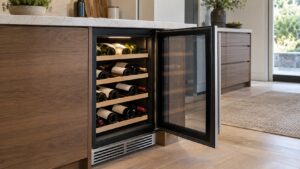
Bertazzoni compressor-based wine refrigeration is the term that describes how these built-in units actually chill their cabinets, and it is worth learning before troubleshooting anything else about the appliance. Two different technologies get sold under the name “wine refrigerator.” The first, thermoelectric cooling, uses a solid-state plate that gets cold on one side when current passes through it — quiet and simple, but limited in how much heat it can move and how far below room temperature it can hold a cabinet. The second, compressor-based cooling, uses the same refrigeration cycle as a kitchen refrigerator: a compressor pressurizes refrigerant, a condenser coil rejects heat, an expansion device drops the pressure, and an evaporator absorbs heat from inside the cabinet. Bertazzoni’s built-in wine refrigeration line uses this second method. The site’s own symptom list for this appliance type is built around compressor behavior — running constantly, cycling, vibration — which is a strong signal by itself that a compressor sits at the center of the system, not a thermoelectric plate.
Why does the cooling method matter if the wine refrigerator is already installed?
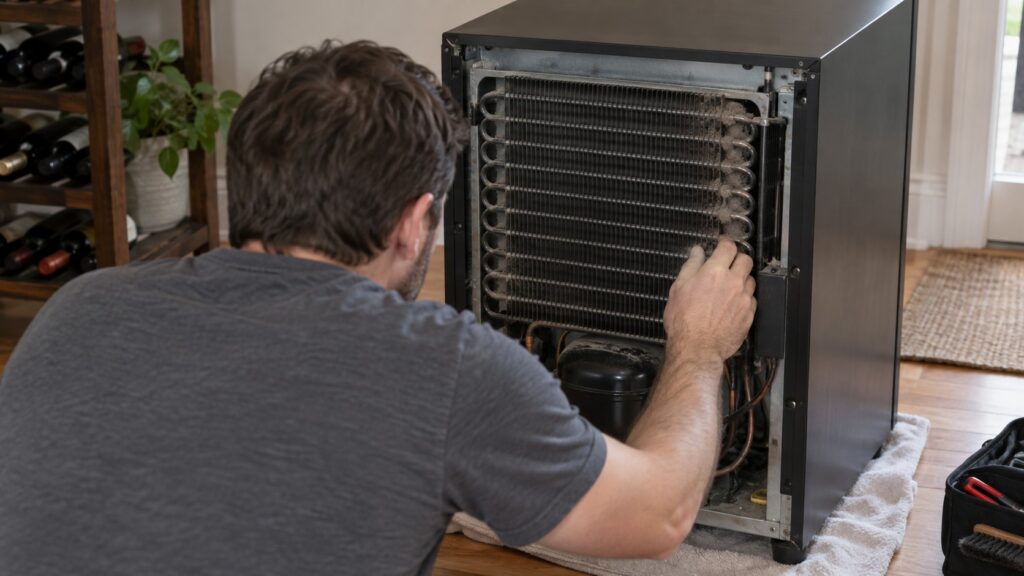
It changes what a given symptom is likely to mean. On a thermoelectric unit, warm wine and a warm-to-the-touch back panel point at the same suspect: the plate itself. On a compressor-based Bertazzoni unit, the same complaint of a cabinet running warm has several separate possible causes — a condenser coil clogged with dust, a fan that has stopped moving air across that coil, a refrigerant-side fault, or a door seal that no longer holds a gasket seat. Knowing the cooling method up front narrows the list of parts a technician actually needs to check, instead of guessing from a symptom that sounds identical across two unrelated technologies.
It also explains a detail that surprises some owners: a Bertazzoni wine refrigerator has an audible cycle, the same way a kitchen refrigerator does. The compressor is expected to switch on, run for a while, and switch off. A unit that runs with no off cycle at all — not one that simply runs sometimes — is what points toward a real fault rather than normal operation.
How can you tell compressor-based cooling from thermoelectric on a unit you are considering?
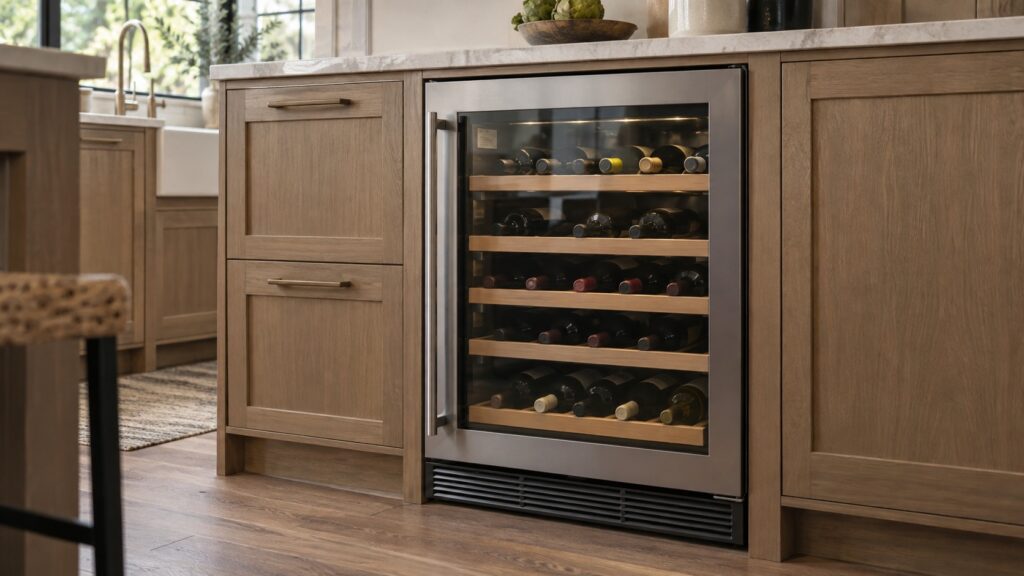
A few practical signs separate the two without opening anything. Compressor-based units are heavier for their size, because the compressor and refrigerant lines add real mass that a thermoelectric plate does not. They also make a low mechanical hum when the compressor is running, distinct from the near-silent operation of a thermoelectric cooler. Bertazzoni’s built-in models, sized to sit flush in cabinetry at 18 and 24 inches wide, are built around this heavier, compressor-based approach rather than the lighter thermoelectric plates used in freestanding countertop coolers.
Does compressor-based cooling mean more maintenance than a thermoelectric cooler?
It means different maintenance, not necessarily more. A thermoelectric cooler has almost nothing to clean beyond dusting vents; a compressor-based Bertazzoni unit benefits from an occasional look at the condenser coil and the airflow path around it, the same habit that keeps a kitchen refrigerator efficient. Skipping that check does not cause sudden failure, but it is the single most common reason a compressor-based cooling system starts running longer than it should to hold the same temperature — the compressor is compensating for a coil that cannot shed heat as fast as it used to.
Why do wine refrigerators get built two different ways in the first place?
The split exists because wine storage covers two very different use cases. A small countertop unit holding a handful of bottles in an already-cool room does not need to fight much heat, so a thermoelectric plate — cheap, silent, with no moving parts to wear out — is good enough. A built-in unit set into finished cabinetry, next to a warm dishwasher or under direct kitchen lighting, has to hold a steady cellar temperature against a much harder heat load, day after day, for years. That is the job a compressor and a sealed refrigerant circuit are actually designed for, and it is why Bertazzoni’s built-in wine refrigeration line is built around that technology rather than a thermoelectric plate. The trade-off is that a compressor-based system has more moving parts — the compressor itself, a fan, an expansion device — and each of those can eventually wear or fail, which is exactly why the symptom list for this appliance type reads the way it does.
What should you check before assuming a compressor problem?
Before booking a repair for what looks like a compressor issue, it is worth ruling out the simpler causes that produce the same symptom on any compressor-based cooling system: a condenser coil that has not been cleared of dust in a year or more, a room temperature well above what the unit was rated for, or a door that has been left open long enough to load the cabinet with warm air. None of these require a technician to fix, and all three produce the same “running constantly” complaint that a genuine compressor fault does.
If the unit still runs constantly, cycles oddly, or will not hold temperature after those checks, that points toward the sealed system itself rather than airflow or placement, and it is worth reading our wine refrigeration compressor repair-or-replace guide before deciding what to do next. For the full range of symptoms this appliance type can show, our wine refrigeration troubleshooting checklist covers the rest.
We are an independent repair company, not a factory service arm, and our technicians work on the compressor-based systems Bertazzoni actually ships rather than assuming a mini-fridge design. Pricing for a visit starts from a diagnostic call, confirmed before any work begins. If your unit is showing one of the symptoms above, schedule Bertazzoni wine refrigeration repair or book a visit directly.