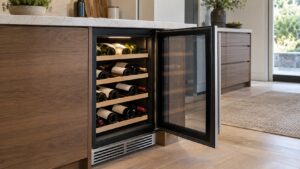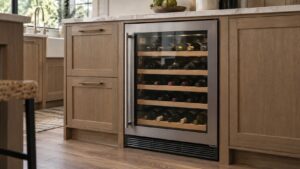
Bertazzoni wine storage temperature is one number that people set once and then argue about for years. The useful answer is less about a perfect figure than about stability: wine tolerates a wide band of temperatures and reacts badly to movement within it. A cabinet holding a steady fifty-five degrees serves wine better than one averaging fifty-five while swinging eight degrees every time the compressor cycles or the door opens.
One zone or two, and how to use each
A single-zone cabinet is a storage cabinet. Set it in the mid-fifties and leave it there; it will hold everything acceptably and hold long-term bottles properly. Pulling a red out an hour before dinner and a white out twenty minutes before does the rest.
A dual-zone cabinet is a storage zone plus a serving zone. The mistake is to treat both as storage and set them to two arbitrary numbers. Decide which zone is which: one at storage temperature for bottles that are staying, one at serving temperature for the bottles you expect to open this month.
Do not set the two zones as far apart as the cabinet allows just because it can. A large gap makes the compressor work continuously against itself in a shared cabinet, which is both audible and harder on the appliance.
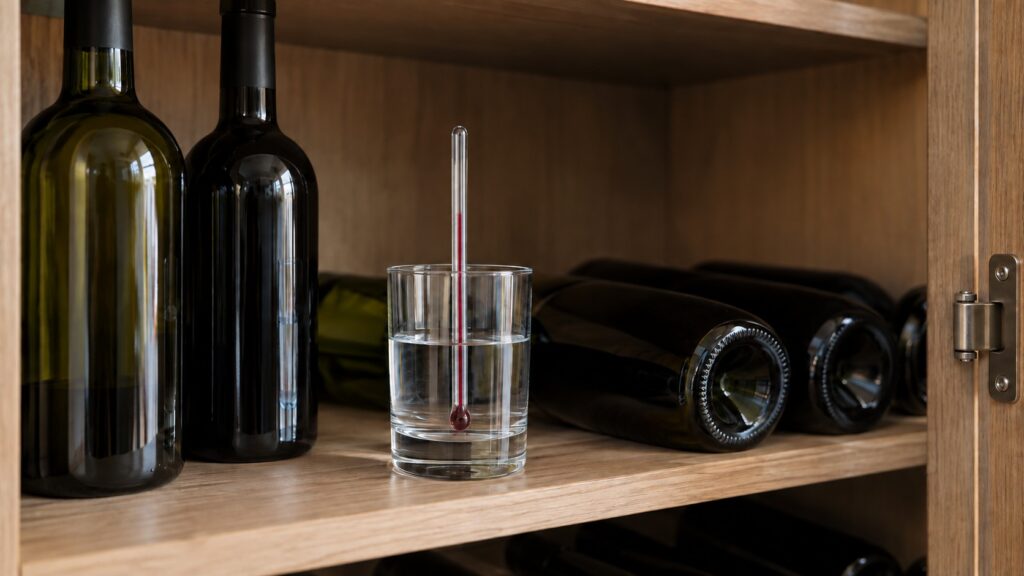
What actually harms wine in a cabinet
Cycling. Temperature moving up and down repeatedly expands and contracts the wine, working it past the cork. Signs of this are visible: seepage at the capsule, or a cork that has started to push. A cabinet that holds steady prevents it.
Vibration. Constant low-level vibration keeps sediment in suspension and is thought to accelerate aging. It is also the easiest thing to get wrong at home — a cabinet that is not level or is touching a cabinet carcass transmits every compressor start into the bottles.
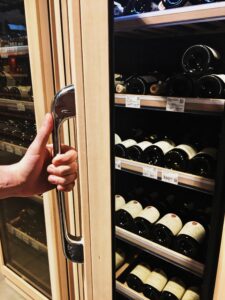
Light. Ultraviolet degrades wine, which is why bottles are green or brown. Cabinet doors are treated, but a cabinet in direct sun is working against its own glass, and the interior light should not be left on as display lighting.
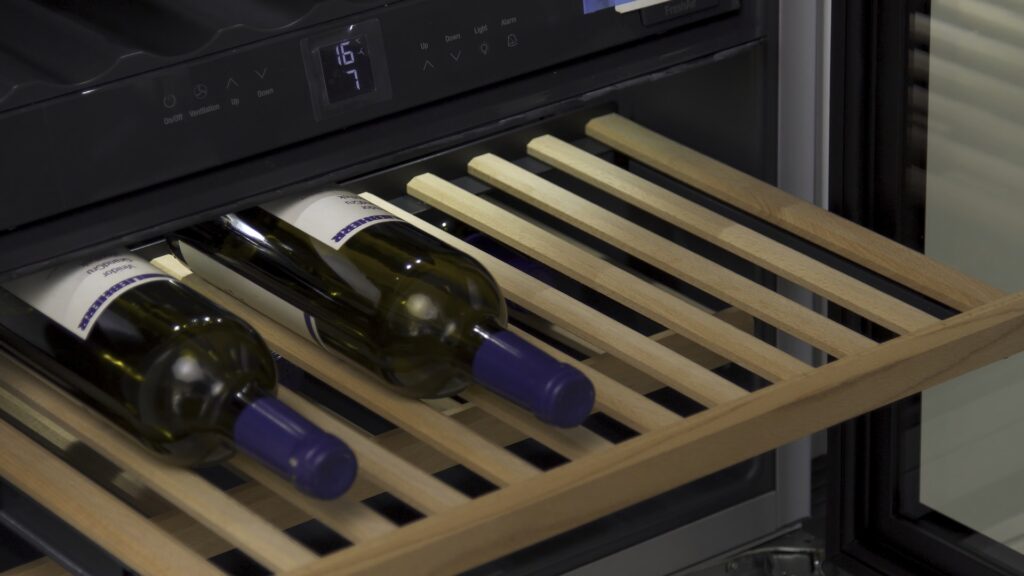
Dry air. A cork that dries shrinks and admits air. Storing bottles on their sides keeps the cork wet from the inside, which is the main defense; ambient humidity helps but matters less than orientation.
Where the cabinet stands
Placement decides more than the setting does. A wine cabinet rejects heat, and it needs somewhere to reject it to.
- Ventilation. Built-in models vent at the front and can sit in a run of cabinetry. A freestanding model pushed into a tight alcove will run continuously and never reach its setting.
- Heat sources. Beside an oven, a dishwasher or a refrigerator’s condenser, the cabinet fights its neighbors all day.
- Sunlight. A glass door in afternoon sun is a heat gain the cabinet cannot win against.
- Level. Level it properly. It stops vibration, it lets the door seal evenly, and it keeps condensate draining where it should.
The site’s page on installation checks covers the clearances, and it is worth reading before deciding a cabinet is underperforming.
Loading, which changes the temperature you get
Wine cabinets are designed around full shelves. A nearly empty cabinet has little thermal mass, so it responds sharply to every door opening and cycles more often. A full cabinet holds its temperature through an open door almost indifferently.
Two practical points. Do not block the internal airflow — most cabinets circulate air along the back or through slots, and a bottle laid across the path creates a warm pocket. And do not expect the top and bottom of a tall cabinet to read identically: some stratification is normal and single-zone cabinets are often deliberately a little cooler at the bottom, which is where the bottles for keeping should go.
A wine cabinet is not a refrigerator, and the difference matters
People sometimes use a wine cabinet as overflow chilled storage, and it is worth knowing what that costs. A wine cabinet is built to hold a narrow band gently: its cooling is deliberately slow, its air is kept humid rather than dried, and there is no defrost cycle of the kind a food refrigerator runs.
Put groceries in it and three things follow. The cabinet works harder to pull down warm items, which is exactly the cycling that wine dislikes. Moisture and food odors enter an interior designed to keep humidity in rather than move it out. And the door gets opened far more often than a wine cabinet is designed around, so the average temperature drifts upward through the day.
If more chilled storage is genuinely needed, that is a refrigerator question rather than a setting question, and using the wine cabinet for it will shorten the life of both the wine and the appliance.
Reading the display, and when not to trust it
If the cabinet has stopped holding temperature, the site’s wine refrigeration troubleshooting checklist covers the first checks, and the maintenance guide covers the seal and the condenser, which between them explain most of these calls.
When to call
Call when the cabinet will not reach its setting with clear ventilation, when temperature swings widely through the day, when the compressor runs without stopping, when the door will not seal or the alarm repeats, or when vibration is noticeable through the bottles.
We are an independent repair company and not a factory service arm. Pricing starts from a diagnostic visit and we confirm the estimate before any work begins. Bertazzoni wine refrigeration repair covers compressors, fans, sensors, seals and controls, and you can schedule a visit online.