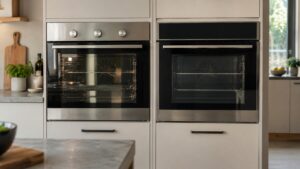
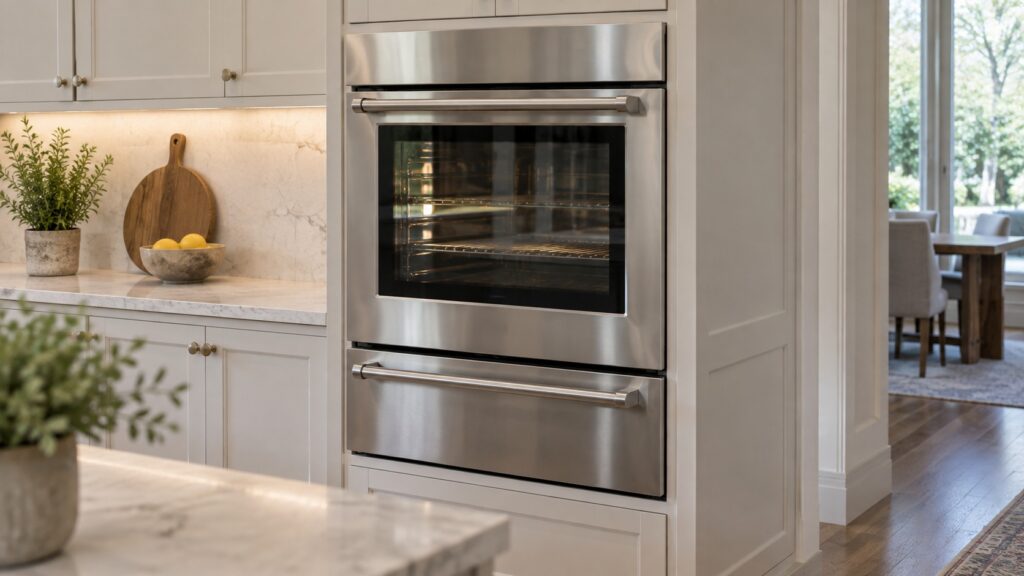
TL;DR: A Bertazzoni warming drawer oven, such as the PROF30WDEX or MAST30WDEX, is a wall-oven column with a low-temperature drawer built in underneath the main cavity, and the two run on separate heating circuits. Understanding that separation explains why the drawer can stay warm while the oven above sits idle, and why a drawer that will not heat is rarely connected to a problem with the oven itself.
What is a Bertazzoni warming drawer oven, and how is it different from a second oven?
The site’s own model list shows both a PROF30WDEX and a MAST30WDEX — a warming-drawer wall oven built into the Professional line and the Master line respectively. A warming drawer is not a second full oven stacked underneath the first. It runs at a much lower temperature range, typically well under what a bake or roast cycle needs, and it is built to hold already-cooked food at serving temperature — crisp bread, a finished roast, warmed plates — rather than cook anything from raw. The drawer and the main oven cavity above it are two separate compartments with two separate heating elements, and on a Bertazzoni column they are wired and controlled independently of each other.
How does the heating element in the drawer actually work?
The drawer uses a single, low-wattage heating element mounted beneath the drawer pan, paired with a thermostat that cycles the element on and off to hold a target temperature rather than climb toward one quickly. Because the element sits below the drawer rather than surrounding it the way an oven cavity’s elements do, heat rises through the drawer pan and settles evenly across whatever sits on it. Some Bertazzoni warming drawers add a humidity control, a small adjustable vent that lets the drawer run drier for crisping bread or moister for keeping food from drying out — a detail worth checking in the owner’s manual for your specific model, since it changes how the drawer should be used for different foods.
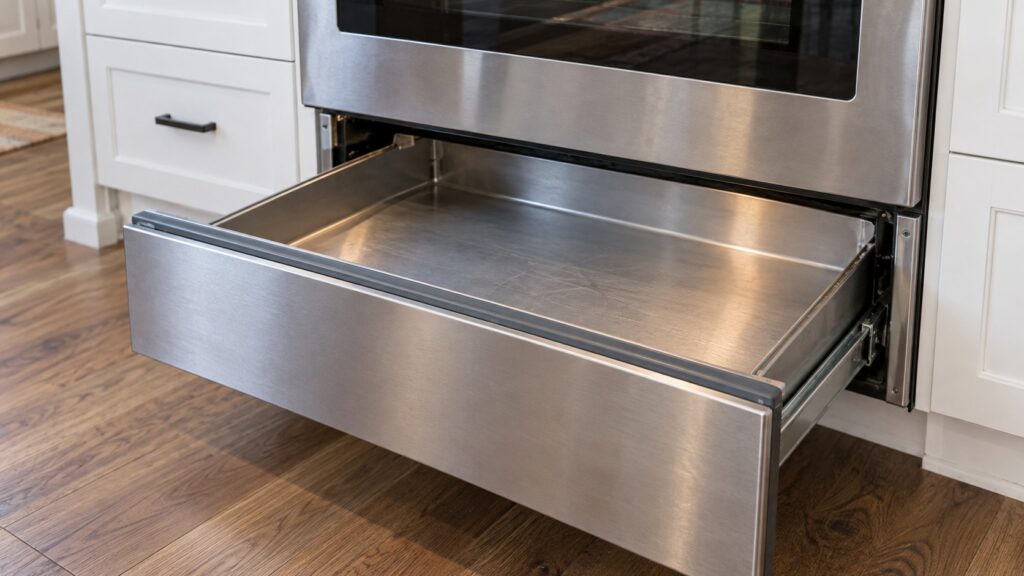
Why does a warming drawer sometimes not heat while the oven above works fine?
Because the two compartments do not share a heating circuit, a fault in the drawer’s element, its thermostat, or the wiring feeding it does not touch the main oven, and the reverse is also true. This is the detail that trips up a lot of troubleshooting: an owner assumes that if the oven bakes normally, the whole appliance’s electronics must be fine, so a cold drawer gets blamed on user error rather than a failed part. In practice, a drawer that will not warm up at all, with the main oven working normally, points specifically at the drawer’s own element or thermostat rather than at the oven’s control board.
The reverse pattern is equally telling. If the main oven is not heating correctly but the drawer works fine, that rules out a shared power-supply fault and points back at whatever the oven’s own oven troubleshooting checklist covers for the cavity itself.
Does the warming drawer share the oven’s self-clean or convection systems?
No. Self-clean cycles and convection fans belong to the main cavity’s design, built to handle much higher temperatures and active air movement; a warming drawer has neither a self-clean function nor a fan, because it never runs hot enough to need one and its whole purpose is to hold heat evenly rather than circulate it. This is also why a warming drawer that runs warm to the touch on the outside cabinet face is not unusual — a small amount of heat naturally escapes past the drawer’s seal — while an oven cavity running hot on the outside during a bake cycle is normal for a different reason entirely: the insulation working as designed against a much higher internal temperature.
What maintenance does a warming drawer need that the oven does not?
The drawer’s own gasket and the drawer pan benefit from an occasional wipe-down, since spills tend to collect at the pan’s edges where the seal sits, and a poor seal lets warmth escape faster than the low-wattage element can replace it — which can look like a weak drawer when the real issue is a seal that needs cleaning, not a failing part. Beyond that, the drawer needs little upkeep beyond what the rest of the wall-oven column already gets; our oven cleaning and maintenance guide covers the column as a whole.
How should a warming drawer actually be used day to day?
Because the drawer’s element is sized to hold, not to cook, loading it with cold food straight from the refrigerator and expecting it to reach a safe serving temperature quickly asks more of the element than it is built to deliver. The drawer works best when the food going in is already hot from the oven or stovetop, and the drawer’s job is simply to keep it there while the rest of a meal finishes. Preheating the drawer for a few minutes before loading food, the same habit most people already apply to the main oven, gives the single element a head start rather than asking it to fight a large temperature gap on its own. This is also the point at which the humidity vent, where fitted, earns its keep: a drier setting keeps bread or fried food from turning soggy while it waits, and a moister setting keeps a roast or vegetables from drying out over twenty or thirty minutes of holding time.
When is a cold warming drawer worth booking a repair for?
If the drawer will not warm at all after a normal amount of preheating time, and the seal and pan are clean, that points at the element or its thermostat rather than anything the owner can fix by adjusting settings. Because the drawer runs on its own circuit, this is usually a contained repair rather than a sign of a wider electrical fault in the column — but it is still worth having it checked before food safety becomes a concern, since a drawer that reads warm on the control panel but is not actually holding temperature can leave food sitting at an unsafe temperature without any obvious sign.
We are an independent repair company and do not claim any factory affiliation with Bertazzoni; our technicians diagnose the drawer’s element, thermostat and wiring on their own before assuming a shared fault with the oven above. Pricing for a visit starts from a diagnostic call, confirmed before work begins. If your PROF30WDEX, MAST30WDEX, or a similar model’s drawer will not heat, schedule Bertazzoni oven repair or book a visit directly.