TL;DR: A Bertazzoni range hood’s grease filters need cleaning far more often than most owners assume — every two to four weeks under regular cooking, sooner with frequent frying or searing — and a clogged filter is the single most common reason behind two unrelated-sounding complaints: weak airflow and odor that lingers after cooking instead of clearing.
Why do grease filters matter more than most owners realize?
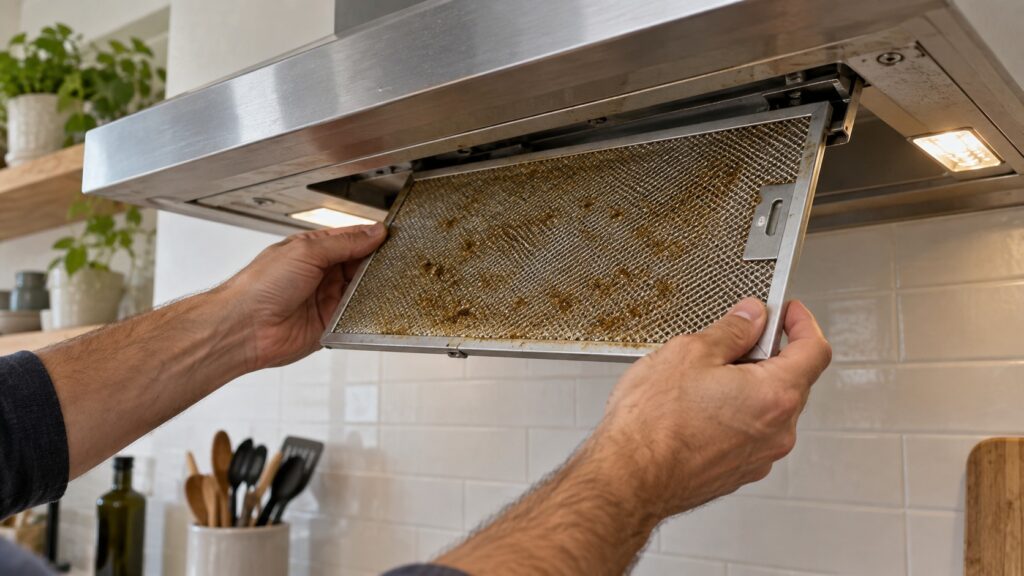
A range hood’s fan is only as effective as the air path leading to it. The metal mesh or baffle filters sit directly between the cooking surface and that fan, and every bit of airborne grease the hood pulls in has to pass through them first. As grease accumulates in the mesh, it narrows the gaps the air has to move through, and the fan has to work harder to pull the same volume of air. Past a certain point, the fan simply cannot move as much air as it is rated for, no matter what speed setting is selected — the filter, not the motor, has become the bottleneck.
How often should Bertazzoni range hood filters actually be cleaned?
For a household cooking with the hood running regularly, a baseline of every two to four weeks keeps grease from building past the point where a simple wash restores full airflow. Frequent high-heat cooking — searing, frying, or anything that produces visible smoke or heavy steam — pushes that interval shorter, sometimes to once a week, because grease aerosolizes faster at higher cooking temperatures and settles into the filter mesh more thickly per session. A household that cooks lightly and mostly at lower heat can sometimes stretch the interval a little, but waiting until airflow noticeably weakens before cleaning means the filter has already been restricting airflow for some time before anyone noticed.
How does a clogged filter cause odor that will not clear?
This connection surprises a lot of owners, because odor and airflow sound like two separate problems. They are usually the same problem seen two ways. A range hood clears cooking odor by moving a steady volume of air out of the kitchen; when a clogged filter cuts that volume down, less odor-carrying air leaves per minute, so smells that would normally clear within a few minutes linger for much longer, or seem to hang in the kitchen even with the hood running on a high setting. Grease trapped in the filter itself can also hold onto odor between cooking sessions, adding a faint smell of its own on top of whatever is cooking that day. Cleaning the filter frequently addresses both causes at once, which is why it is worth checking before assuming a lingering-odor complaint points at the fan motor or the ducting.
Does filter cleaning matter differently for an island hood versus a wall-mounted one?
An island range hood, mounted with open air on every side rather than tucked against a wall, generally has to work a little harder to capture the same rising plume of heat and grease, since there is no back wall helping direct airflow toward the intake. That makes filter condition matter slightly more on an island installation: any reduction in airflow from a clogged filter compounds with the already tougher job an island hood has capturing cooking exhaust in an open room. A wall-mounted hood benefits from the wall directing more of the rising air straight up into the intake, which gives it a little more margin before a dirty filter becomes noticeable. Neither difference changes the cleaning schedule described above, but it explains why an island installation tends to show weak-airflow symptoms sooner after a filter starts clogging than a wall-mounted hood in an otherwise similar kitchen.
What is the right way to clean a Bertazzoni range hood filter without damaging it?
Most Bertazzoni range hood filters are metal mesh or baffle-style and tolerate a hot water soak with a degreasing dish detergent, followed by a rinse and full air-dry before reinstalling — reinstalling a still-damp filter traps moisture against the fan housing longer than necessary. Many are also dishwasher-safe, but check the specific model’s manual before running one through a cycle, since detergent strength and water temperature in a dishwasher can vary from what the filter was tested against. Avoid abrasive scrubbing on mesh filters, since bending or tearing the mesh changes how air actually flows through it, which can create the same weak-airflow symptom a clogged filter causes, just from physical damage instead of buildup.
Does the range hood’s fan speed setting change the cleaning interval?
Running a bertazzoni range hood grease filter on a lower fan speed for most cooking, rather than the highest setting available, does not reduce how much grease actually reaches the filter — it reduces how much air moves past the grease already trapped there, which can make weak airflow harder to notice until the difference becomes large. Owners who mostly cook at a low or medium fan setting sometimes go longer between cleanings without realizing it, simply because the drop in airflow is less obvious against an already-modest baseline. Checking the filter on a fixed calendar schedule, rather than waiting to notice a change in how the hood performs, avoids this blind spot entirely and is the more reliable habit regardless of which fan speed gets used day to day.
Can a clean filter still leave weak airflow or lingering odor?
Yes, and that is the point where the cause has likely moved beyond the filter itself. Grease buildup further along the duct run, a fan that has slowed due to a worn motor or bearing, or a duct run that was undersized or poorly routed at installation can all produce the same two symptoms even with spotless filters. If cleaning the filters on the schedule above does not restore normal airflow or clear lingering odor within a cooking session or two, that is the point to move from routine upkeep to a proper diagnosis rather than cleaning the same filters again expecting a different result.
Our range hood troubleshooting checklist covers weak airflow and odor complaints that persist past a clean filter, and our guide to how range hood airflow is rated explains what a hood’s stated airflow number actually means, which is useful context once filters are ruled out.
We are an independent repair company and do not claim any factory affiliation with Bertazzoni; our technicians check duct routing and fan condition directly rather than assuming a dirty filter once the simple fix has already been tried. Pricing for a visit starts from a diagnostic call, confirmed before work begins. If your range hood’s airflow or odor clearing has not improved after a proper filter cleaning, schedule Bertazzoni range hood repair or book a visit directly.