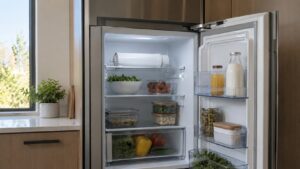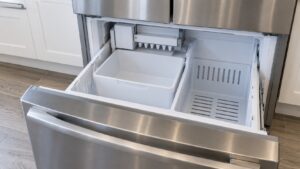
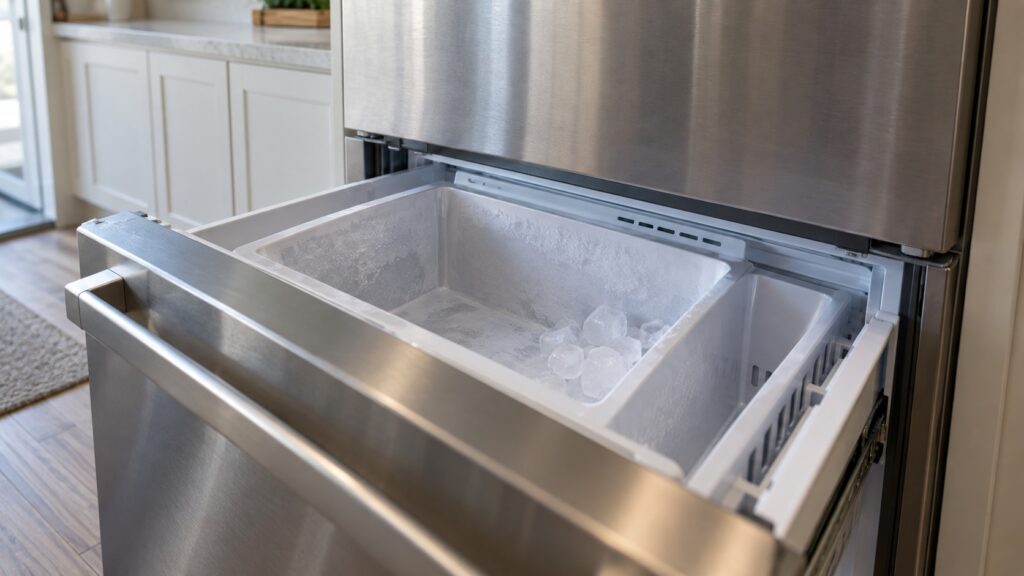
A Bertazzoni refrigerator ice maker is a small machine bolted into the freezer compartment, and it only makes ice when four separate things line up: the water valve opens, the mold fills, the mold gets cold enough, and the harvest motor turns. Ice stops when any one of the four fails, and the cabinet carries on cooling perfectly while it happens. That is why a refrigerator that is clearly working can still produce nothing, and why the first question is never which part is broken but which of the four steps stopped.
How does a Bertazzoni refrigerator ice maker actually make a cube?
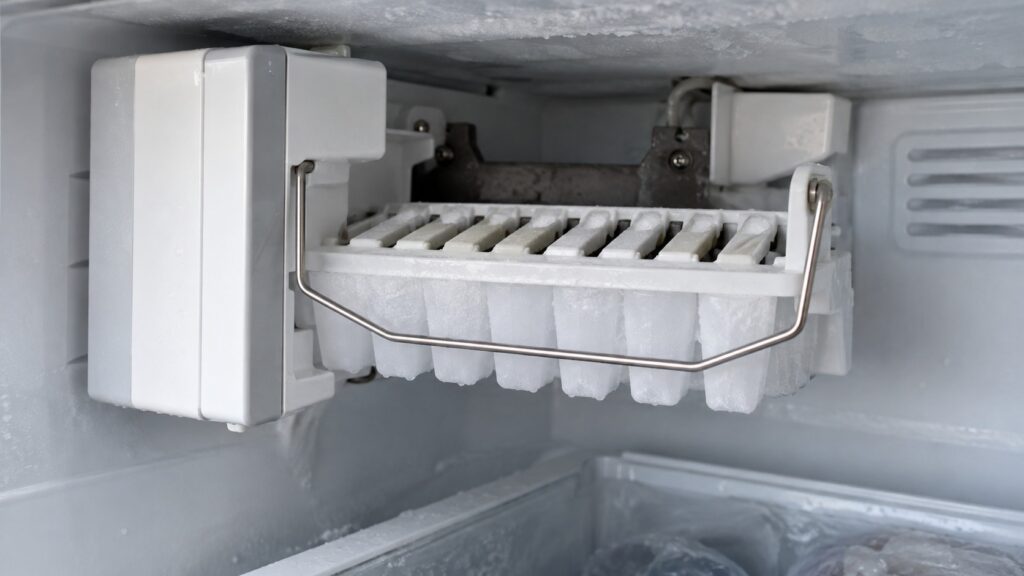
The cycle starts with the mold empty and the arm at rest. The control opens the fill valve for a fixed number of seconds, water runs down the fill tube and settles across the mold, and then nothing happens for a long time. The mold has to reach a set low temperature before anything else is allowed, which is the step people never see and always underestimate. Only when a thermostat or sensor on the mold reports that temperature does the harvest begin: the small heater warms the mold just enough to release the ice, the motor rotates the ejector, the cubes drop into the bin, and the valve is told to fill again.
Two consequences follow from that sequence. First, an ice maker is slow by design; a full bin from empty is a matter of many hours, not a morning. Second, it is entirely dependent on the freezer actually being cold. If the compartment is running warm, the mold never reaches its release temperature, the harvest never starts, and the ice maker sits with a tray of water in it looking broken while every other part of it is fine.
Why did the ice stop when the refrigerator is still cold?
Work through the four steps in order rather than guessing at parts.
- Is water getting in? Look in the mold. Water sitting there means the valve and the tube are doing their job and the problem is further along. A dry mold means the supply, the valve, or a plug in the tube.
- Is the bin signal stuck? A bail arm parked in the up position stops the whole cycle, and it gets left up by a bag of frozen food, by a cube that slid under it, or by hand while someone was digging for something.
- Is the freezer cold enough? Aim for 0 degrees Fahrenheit in the freezer and around 37 in the refrigerator. A freezer sitting at 15 will keep food frozen and will not make ice.
- Has it been switched off? Ice makers have a power switch or a menu setting, and a house guest, a child, or a power outage followed by a menu reset can all turn it off without anyone noticing.
- Has the door been opening a lot? Warm humid air frosts the mold and the sensor, and a week of heavy use in summer can stall a perfectly good ice maker until it is defrosted.
What does a blocked fill tube look like?
This is the single most common mechanical cause, and it has a signature. Ice appears in the mold as a lump rather than as separate cubes, or a mound of frozen water builds up at the back of the mold and behind it, and the cubes that do come out are small and hollow. What has happened is that the last few drops of a fill have frozen in the tube, and each subsequent fill freezes a little further back until the water is arriving as a trickle or not at all.
The cause is usually the fill valve not sealing perfectly, or a freezer that has been running colder than it needs to be. Thawing the tube with warm water clears it for a while, and the ice maker works for a month before the same mound returns. A tube that plugs repeatedly is telling you about the valve, not about the tube.
Which parts of this should you not touch?
Clearing the bail arm, emptying the bin, checking the freezer temperature with a thermometer and switching the ice maker off and on again are all safe. So is shutting the saddle valve or the shutoff on the water line behind the cabinet if you have a leak and need it stopped.
Stop before the ice maker module itself. It combines a low-voltage control, a heater and a motor inside the freezer, and on a built-in Bertazzoni cabinet it is fitted to a panel that also carries the evaporator behind it. Pulling the module or chipping at frost with anything metal is how an evaporator gets punctured, and a punctured evaporator turns an ice maker call into a sealed-system repair. The water line behind the cabinet is the other place to leave alone: those fittings are compression joints that seal once and weep after being disturbed.
When is it worth a service visit?
A fill tube that plugs again within weeks, an ice maker that fills but never harvests, a motor that runs continuously, and water pooling under the bin are all past the homeowner end of this list. So is a freezer that will not hold zero, because then the ice maker is a symptom and the cabinet is the subject. Note the model number from the plate inside the cabinet before the call, since a column refrigerator and a french-door cabinet use different ice maker assemblies.
We are an independent repair company and not a factory service arm. Pricing starts from a diagnostic visit and we confirm the estimate before any work begins. If the bin has been empty for a week, you can schedule a visit online.
The short symptom page for an ice maker that is not working is the fastest checklist on this site, and a freezer column that has stopped making ice has its own entry. The wider cabinet checks are in the refrigerator troubleshooting checklist, and for hands-on work, ask for refrigerator repair.