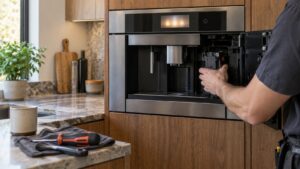
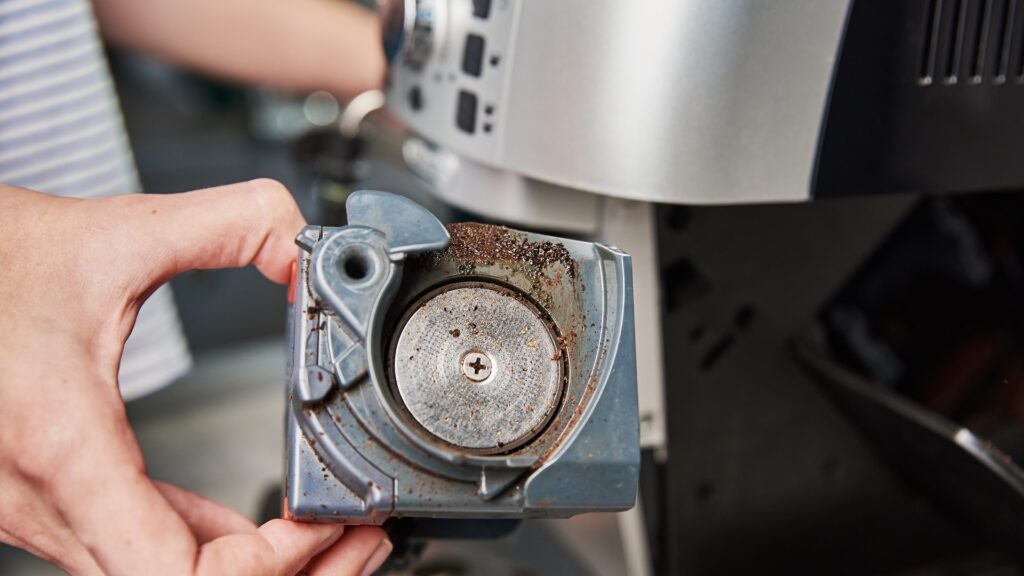
A Bertazzoni coffee machine brew unit is the heart of an automatic machine and the part most often blamed when something goes wrong. It is also the part most often replaced when it did not need to be. Before deciding between repairing the unit, replacing it, or replacing the machine, it is worth knowing what the brew unit does, what genuinely kills one, and which faults look exactly like a failed brew unit while being something far cheaper.
What the brew unit actually does
Every cup follows the same sequence. The grinder delivers a dose into the brew chamber. A piston compresses it into a puck. Hot water is forced through under pressure. The unit then opens, ejects the spent puck into the waste container, and returns to its home position ready for the next cup.
That is a lot of mechanism doing a lot of cycles. A household making four cups a day puts a brew unit through well over a thousand cycles a year, each one wet, hot and full of fine particles. What wears is predictable: seals harden, the drive gear takes the load of every compression, and fine grounds work their way into places they were never meant to reach.
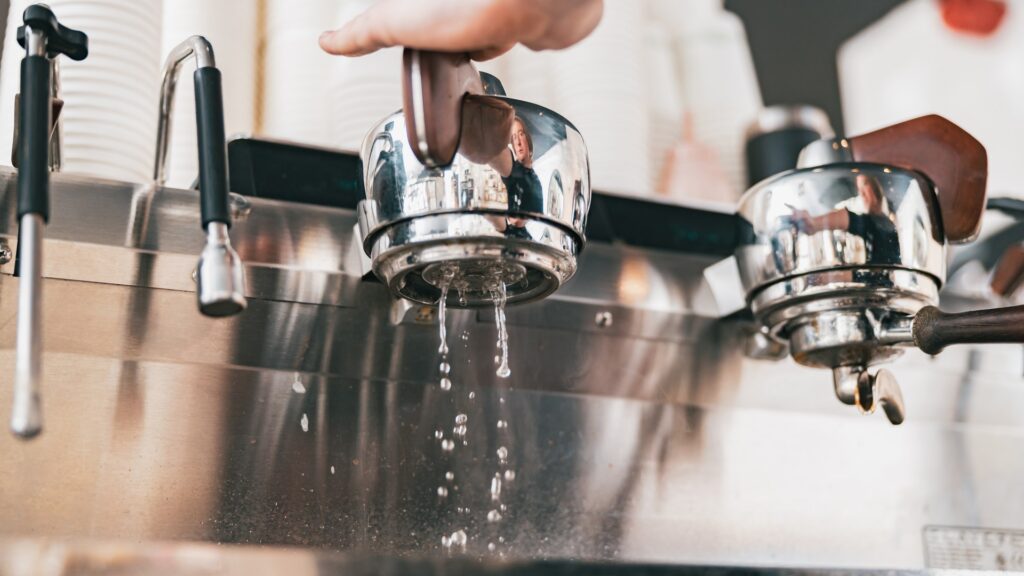
The faults that imitate a dead brew unit
Before accepting a brew unit diagnosis, rule these out — all of them present as a machine that will not brew or a unit that will not move:
- Grounds jamming the mechanism. The commonest cause by far. A unit that will not slide out or will not return is usually obstructed rather than broken.
- The unit is not at home position. Most machines will not accept the unit back unless it is in the position it left in. Some have a manual reset; forcing it damages the drive.
- The waste container or drip tray is not seated. Switches read these, and a container not registering stops the cycle before it starts.
- Descale overdue. Scale restricts flow, the machine reads low flow as a blockage, and the symptom appears at the brew unit. The site’s page on a coffee machine troubleshooting checklist covers the order.
- Grind too fine, or a dose problem. An over-compressed puck stalls the cycle and looks mechanical.
- Water path faults. A pump, a valve or a flow meter failing upstream produces no coffee while the brew unit is perfectly healthy.
The first thing to do, which is free
Remove the brew unit if your model allows it. Rinse it under warm running water — water only, no detergent, which leaves residue that taints coffee. Clean the chamber and the screens with a soft brush. Let it dry, lubricate only the points the manual names and only with food-grade grease intended for it, and refit it in its home position.
Clean the compartment while the unit is out: grounds accumulate on the rails and in the corners and are the reason a unit binds. Then run a cleaning cycle if the machine has one.
If the machine brews normally afterward, the unit was not faulty and nothing needs replacing. This outcome is common enough that we do it first on every call of this kind.
When the unit really has failed
Signs that point to genuine failure rather than obstruction:
Repair the unit, or replace the machine
Three questions settle it, and they are the same questions as on any appliance.
Is the unit a serviceable assembly on this model? Removable brew units are replaceable as a part, which makes the repair straightforward and predictable. Machines with a fixed internal group are a different job, and the labor changes the arithmetic.
What else is worn? The grinder burrs, the pump, the milk system and the seals throughout are the same age as the brew unit. Replacing one wear item on a machine where several are near the end is a poor investment, and an honest assessment should tell you which of them are close.
What is the part’s availability? A brew unit on long back order changes a good repair into a long wait, and the site’s questions to ask before scheduling covers what to establish up front.
As a rule of thumb: a machine under five years old with a clean service history is worth repairing without much debate. Past eight, with several systems worn, it becomes a genuine choice — and one that should be made on measured condition rather than on the age alone.
Keeping the next one alive longer
Weekly removal and rinse, descaling on the schedule the machine asks for rather than when it insists, a grind setting that is not at the finest extreme, and emptying the waste container before it is compacted. Those four habits are what separate a brew unit that lasts a decade from one that fails in three years. The site’s cleaning and maintenance guide has the intervals.
When to call
Call when the brew unit will not return to position after a thorough clean, when the machine reports a brew fault repeatedly, when water bypasses the puck and coffee is consistently weak, when the compartment is wet, or when you want the machine’s overall condition assessed before deciding to replace it.
We are an independent repair company and not a factory service arm. Pricing starts from a diagnostic visit and we confirm the estimate before any work begins. Bertazzoni coffee machine repair covers brew units, pumps, grinders, valves and controls, and you can schedule a visit online.